
Side Zipper vs. Back Zipper Bustier Sundresses: Which Design Offers the Best Ease and Fit?
A side zipper is the more practical closure on a fitted bustier sundress, because it lets you step into the dress and fasten it yourself, and it leaves the back free for lacing. A back zipper is harder to reach alone, sits against the spine when you lean back in a chair, and competes for space with any back adjustment. The Floral Bustier Midriff Waist Shaper Dress uses a side zipper alongside a lace-up back, which is the combination that makes a structured dress a solo garment rather than a two-person one.
Why closure placement matters more on a fitted dress
On a loose sundress the closure barely matters. There is enough ease to pull the dress over your head, and a zipper is often decorative or absent entirely.
On a fitted dress it matters a great deal, for three reasons. A structured bodice has little ease, so the dress has to open enough to get into. The bodice shape is set and pulling it over your head distorts it and disturbs any neckline ties. And if the back carries an adjustment panel, a back zipper has to share that space, which usually means a shorter zipper, a more complicated back, or both.
That is why closure placement is a construction decision rather than a detail, and why it is worth checking before buying.
Side-by-side comparison
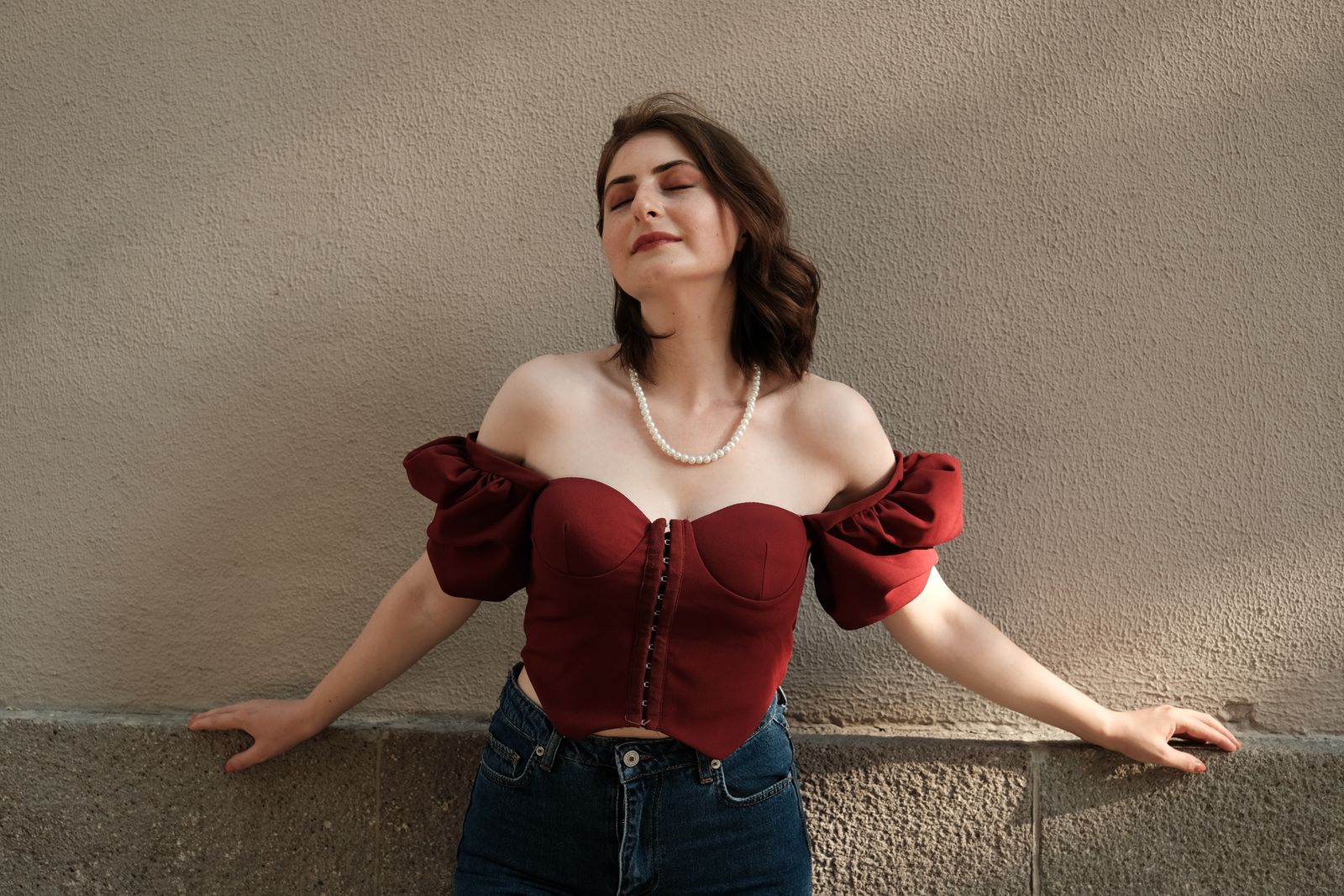
Photo by Alican Helik on Pexels
| Factor | Side zipper | Back zipper | |---|---|---| | Fastening alone | Straightforward; the zipper is within easy reach | Awkward, especially the top few inches | | Getting in | Step in, no need to go overhead | Usually overhead or step-in with more reaching | | Comfort seated | Nothing along the spine | Zipper tape against the spine when leaning back | | Compatible with a lace-up back | Yes; the back stays free for lacing | Competes for the same panel | | Effect on the silhouette | Hidden in the side seam | Runs down the center back | | Protecting hair and makeup | Better; the dress goes on from below | Higher risk when pulled overhead | | Ease of alterations | Side seams are the usual place to adjust fit | Center back alterations are more involved | | Snag risk | Lower; the tape sits in a straight seam | Higher where it meets a lacing panel |
How a side zipper and a lace-up back work together
This pairing is the reason the combination shows up on shaping dresses, and understanding it changes how you get dressed.
The side zipper is a fixed closure. It defines the circumference the lacing then works within, and it either closes comfortably or the size is wrong. The lacing is the adjustable part: it distributes that circumference along the back and sets the waist tension. Because the two are in different places, neither interferes with the other.
That means you can set the lacing once at the tension you like, tie it off, and leave it. From then on the dress opens and closes at the side only, which takes about as long as any zipped dress. A dress with a back zipper and back lacing does not allow that, because the zipper sits where the lacing needs to be adjusted.
The correct order, once you know your setting:
Which is easier to fasten without help
Side, by a clear margin. Reaching across your own body to a side seam is a normal range of motion. Reaching behind and up between your shoulder blades is not, which is why back-zip dresses generate so much improvisation with door handles and coat hangers.
There is a secondary advantage: you can see a side zipper. Being able to watch the zipper close means you catch a fold in the fabric before it jams, which is the most common way a zipper gets damaged.
Which is more comfortable through a long event
A side zipper wins for seated events. A center-back zipper puts a strip of zipper tape and teeth against the spine, and in a hard garden chair or a car seat you notice it, particularly at the waist where a fitted dress presses in slightly.
A side zipper sits along the side seam, an area with less direct contact against most chair backs. On a fitted bodice the side seam is also under less strain than the center back when you lean forward, so the zipper is doing less work over the course of a long event.
What about a lace-up back with no zipper at all?

Photo by Thiều Hoàng Phước on Pexels
Some dresses use lacing as the only closure. That is workable if the lacing panel opens wide enough to step into, and awkward if it does not, because setting and unsetting the lacing becomes part of getting dressed every single time.
The three configurations, ranked for everyday practicality:
Notes on how these details come together in the construction of this particular dress are in the design review.
How to care for a side zipper so it lasts
The zipper and the lacing are the two moving parts on a shaping dress, and the zipper is the one that fails if neglected.
- Close it before washing. An open zipper catches on other fabric in the machine and the teeth distort.
- Support the fabric as you close it. Hold the seam flat below the slider rather than pulling the slider through a bunched seam.
- Do not force a stuck slider. Back it off, find the fold or thread that is catching, clear it, then continue.
- Store the dress with the zipper closed and the lacing slack, which keeps the seam aligned and takes tension off the lacing panel.
- Follow the sewn-in care label rather than a general rule, since it is the only care instruction specific to the garment you own.
FAQ
Is a side zipper less secure than a back zipper? No. Both are stitched into a structural seam. On a fitted bodice the side seam is generally under less strain when you lean forward, so if anything a side zipper has an easier job.
Can a side zipper be seen through the fabric? On a busy print, essentially never; the seam and the print break up the line. On a plain light fabric a zipper is more visible wherever it sits, back or side.
Does a side zipper make the dress harder to alter? It usually makes it easier. Side seams are the standard place a tailor adjusts a dress, and a side zipper is a familiar element to work around. Center-back alterations on a dress with a lacing panel are the harder job.
Should you zip first or lace first? Zip first. The zipper is a fixed closure that sets the circumference the lacing works within, so lacing first means redoing it after the zipper closes.
Next step
When comparing shaping sundresses, check the closure description before the photographs. A side zipper paired with a real lace-up back is the configuration that lets you dress alone, keep your adjustment saved, and sit comfortably through a long event. For a fuller read on how this dress is put together and how it wears, see the full review and the comparison against traditional sundresses.
Cover photo by Reginaldo Lustosa on Pexels.