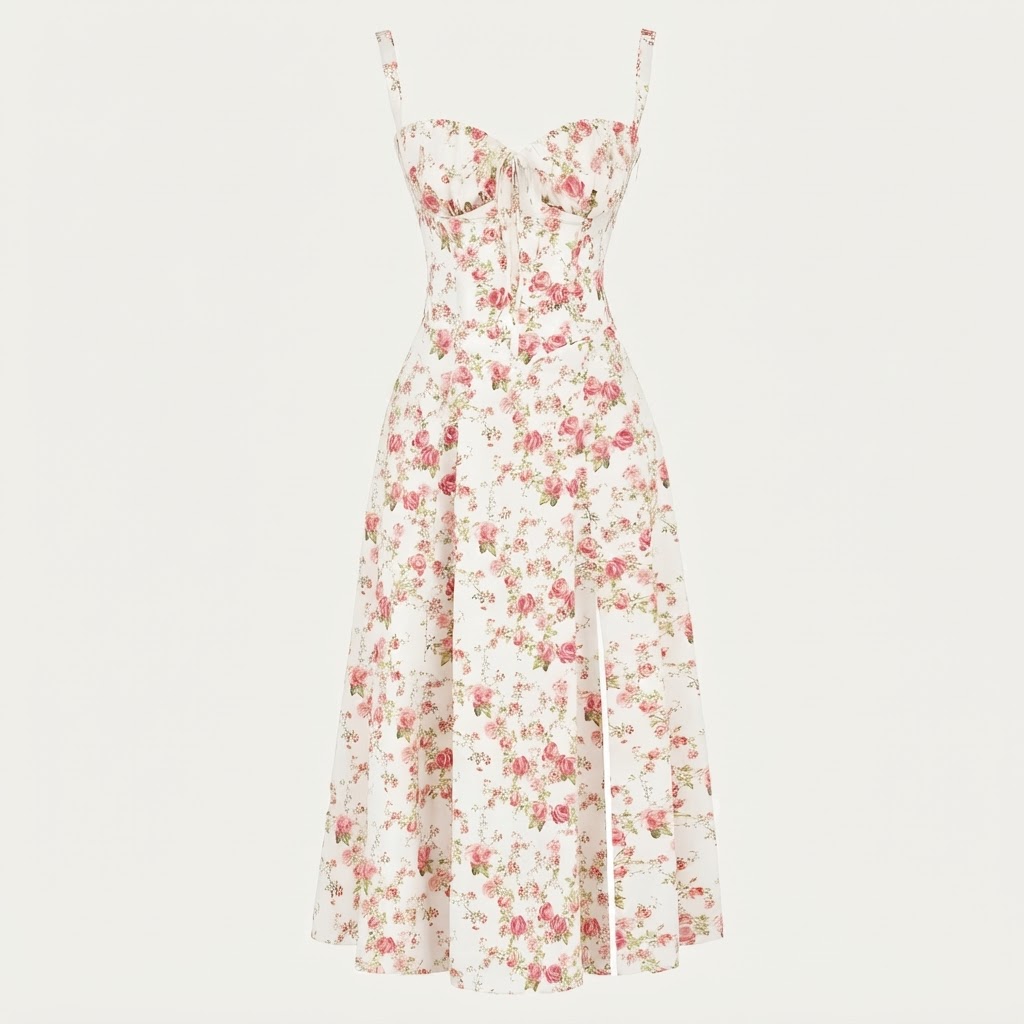
Bustier Waist Shaper Dress vs. Traditional Sundresses: Fit, Support, and Utility
Choosing between a standard summer sundress and a structured shaping dress comes down to fit, support, and practical convenience.
Structural Support and Bust Architecture
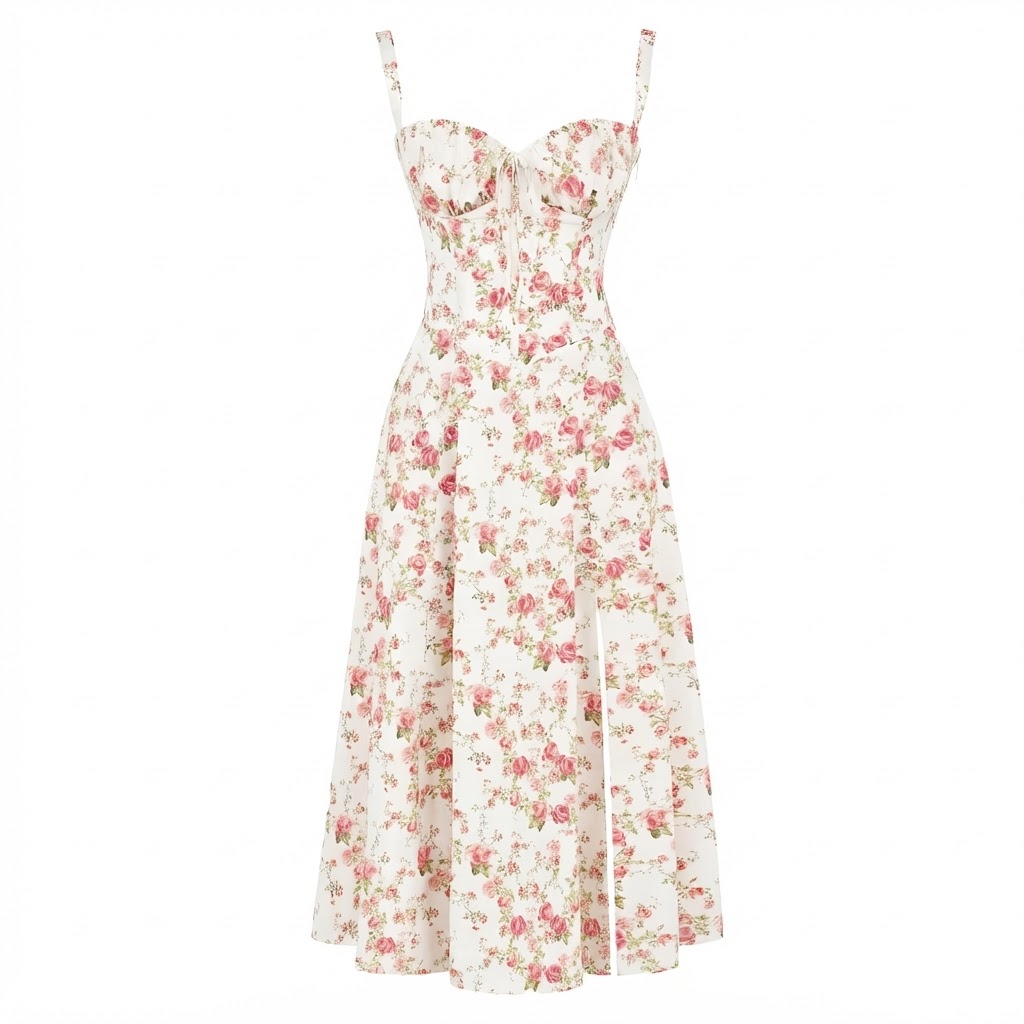
Standard sundresses frequently rely on loose elastic bands or unstructured straps that provide minimal bust support. In contrast, the Floral Bustier Midriff Waist Shaper Dress features a fitted bustier top combined with a drawstring-tie sweetheart neck, ensuring structured lift and customizable bust framing. A bustier bodice differs from a conventional dress top in one specific way: it is built to hold its own shape rather than to hang from the shoulders. That usually means additional panels through the bust, a firmer or doubled fabric in the bodice, and sometimes light boning at the seams.
The practical consequence is what you can wear underneath. A structured bodice is designed to work without a conventional bra, and adding one usually spoils the line rather than improving it, so the garment has to do the supporting itself.
The honest limit is that structural support scales less well with bust size than an engineered bra does. For smaller and mid-range cup sizes a well-cut bustier is genuinely sufficient for a full day. For fuller busts it will define the shape but provide less lift than a properly fitted bra, and that is worth knowing before an event where you will be standing for six hours rather than sitting for two.
Midsection Cinching and Adjustability
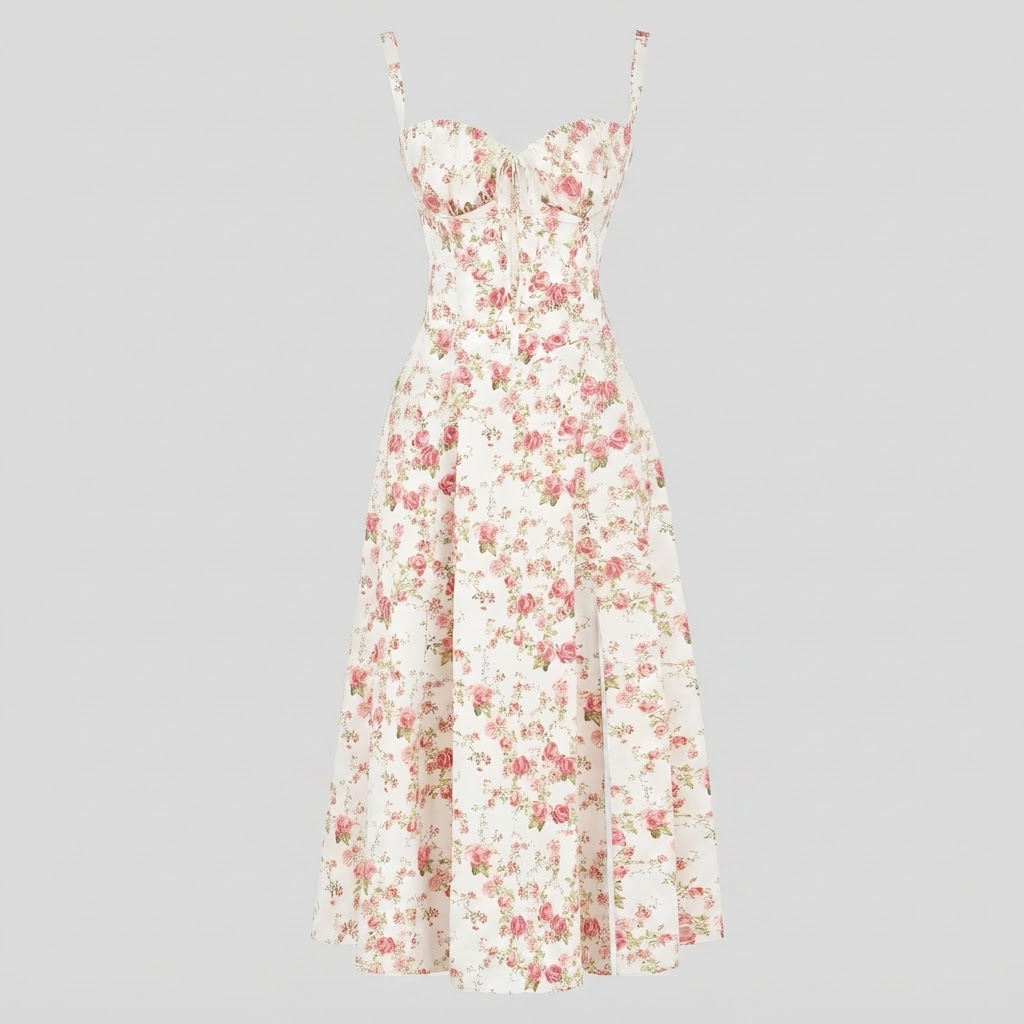
Traditional dresses often fit loosely around the midsection unless tailored. The inclusion of a lace-up back and built-in waist-tightening and shaping architecture allows this dress to adjust precisely to your body shape. Explore the main guide to review how these features flatter various silhouettes. This is where the two categories separate most clearly. A traditional sundress has a fixed relationship between its bust, waist, and hip measurements, set by the pattern. You fit the one that matters most and accept the rest, or you alter it.
A laced back changes that arithmetic. The bust and hip are still fixed by the size, but the waist becomes a range rather than a number, typically a couple of inches either side of nominal. For anyone whose waist-to-bust ratio sits outside the standard assumption, that range is the difference between a dress that fits and one that fits everywhere except the middle.
Two practical notes. Lacing adjusts inwards, not outwards, so buy on your largest measurement. And a laced back takes longer to get into than a zip, which is why a side zip alongside the lacing matters: it lets you set the lacing once and then use the zip day to day.
Practical Features and Everyday Convenience
While traditional sundresses rarely offer storage, this design incorporates hidden pockets that retain a smooth exterior lines. Ease of wear is further enhanced by a side zipper, avoiding the neck-stretching hassle common with pull-over designs. Feature by feature, the differences that show up in ordinary wear rather than on a hanger.
Pockets. Rare in fitted dresses because they are difficult to set without disturbing the line, and genuinely useful when done well. Capacity is a phone, keys, and a card, not a bag.
Side zip. The unglamorous feature that determines whether you can dress alone. A laced back without a zip is a two-person garment the first several times.
Thigh slit. Improves stride length noticeably, which matters on stairs and uneven ground, and requires some thought about wind and seating position outdoors.
Drawstring neckline. Adjusts coverage at the bust, which is the second most common fit complaint after the waist and one that fixed necklines cannot address at all.
A traditional sundress typically offers none of these, and gets simplicity in return: pull it on, no adjustment, nothing to set. That trade is the whole comparison in one line.
Price and Value Proposition
At a standard retail price of STANDARD_DRESS_PRICE, high-end shaping garments can be a significant investment. However, available at PRODUCT_PRICE, this dress delivers premium features—including durable Polyester & Spandex composition—at an accessible price point.
Read the full guide: The Ultimate Guide to Floral Bustier Sundresses: Style, Shaping, and Fit
A structured dress costs more to make than an unstructured one, and the price reflects real differences: more pattern pieces, more seams, additional bodice panels, hardware for the lacing and zip, and set-in pockets that a simpler garment does without.
Whether that is worth paying for depends on how the dress will be used. For occasional wear at a handful of summer events, a simple sundress does the job and the extra construction is largely wasted. For a dress that will be worn regularly through a season, the fitted version usually earns its price twice over, once by replacing separate shapewear and once by holding its shape rather than bagging at the waist after a few wears.
The cost worth watching is care. Structured garments with lacing, hardware, and panelled bodices are less tolerant of hot washes and tumble drying than a simple cotton dress, so factor in gentler laundering rather than assuming it will survive the same treatment.