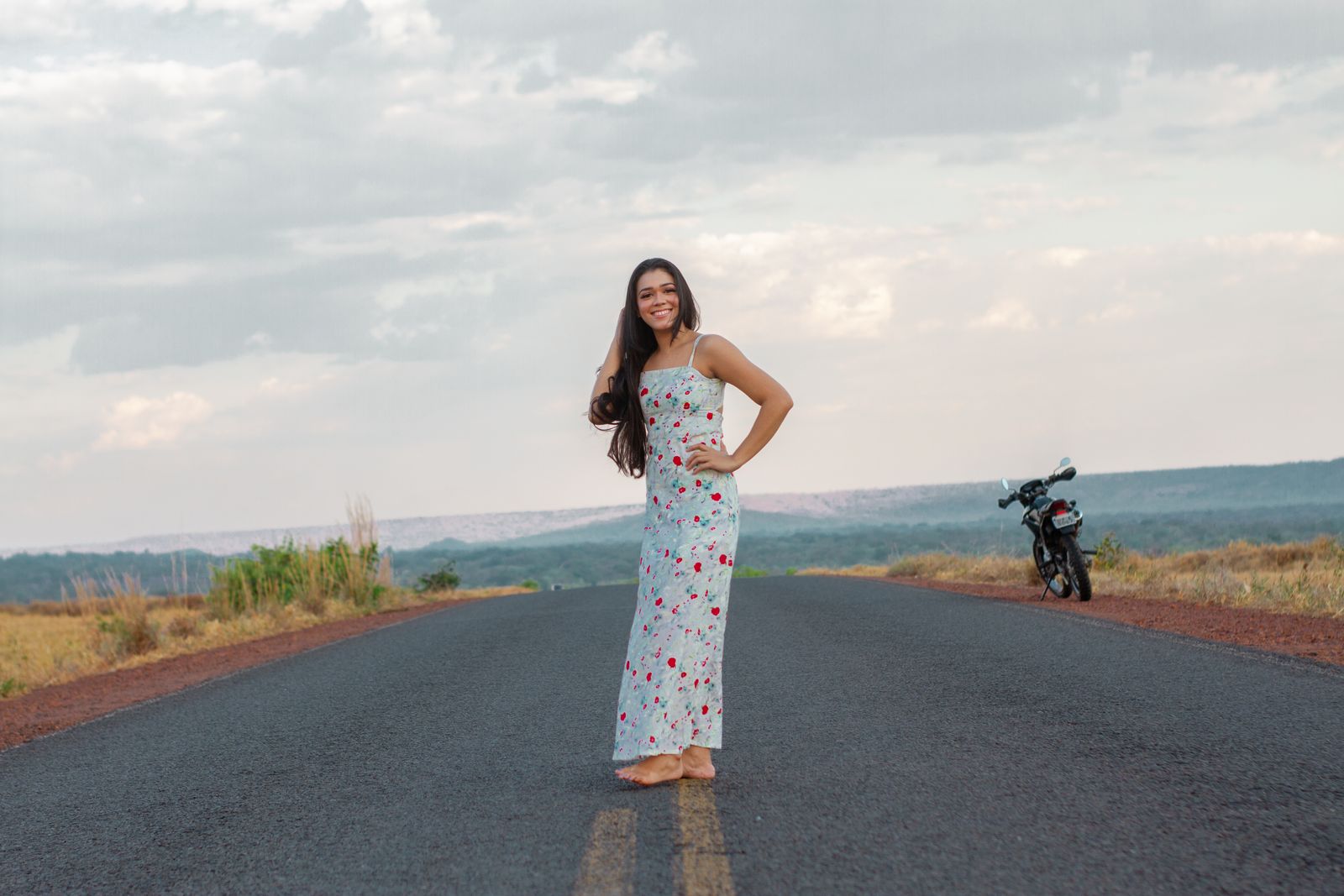
How to Pack a Floral Bustier Sundress So It Arrives Ready to Wear
A structured sundress survives a suitcase when three things happen: the fitted bustier top keeps its shape instead of being crushed flat, the skirt is folded along seams that already exist, and the dress goes into the bag last so nothing presses on it for hours. Loosen the ties, close the side zipper, pad the bust with something soft, and plan twenty minutes of hanging time on arrival. Done that way, a printed bustier sundress usually needs no pressing at all.
Why does a fitted bustier sundress crease differently from a loose dress?
Creases form where fabric is folded under pressure, and a fitted garment gives fabric fewer places to hide. A loose sundress has enough volume that any fold lands somewhere in the drape and disappears when the dress is worn. The Floral Bustier Midriff Waist Shaper Dress is built the opposite way: a fitted bustier top, a defined waist, and a smooth skirt below it. Those are exactly the areas where a hard crease is visible, because there is no extra fabric to absorb it.
The good news is that the print does a lot of the work. Busy multi-color florals scatter light and break up shadow lines, so mild creasing reads as texture rather than damage. That is why a printed dress travels better than a solid one in the same fabric. What the print cannot hide is a single sharp fold pressed across the bust for eight hours by a heavy bag on top of it, which is a packing problem rather than a fabric problem. If you want more detail on how the shaped waist behaves through a long day, the wear test of how the dress holds up over hours covers the same principle from the other direction.
How should the dress be prepared before it goes in the bag?

Photo by Jeric Delos Angeles on Pexels
Five minutes of preparation prevents most arrival problems.
Roll, fold, or hang: which method actually works?
Different bags call for different methods. The table below compares the realistic options.
| Method | Best for | Crease risk | Space used | |---|---|---|---| | Single fold at the waist, dress on top of the bag | Carry-on, one or two nights | Low | Moderate | | Loose roll around a padded core | Backpacks and soft duffels | Low to moderate | Low | | Tight roll, no padding | Nothing, really | High at the bust seam | Very low | | Flat in a packing cube, cube on top | Checked bags with several outfits | Low | Moderate | | Garment bag, hung | Car travel and hotel wardrobes | Very low | High | | Stuffed into a side pocket | Emergencies only | Very high | Low |
Two notes on the roll method. Roll around something soft, such as a rolled towel or a sweater, so the fabric curves rather than kinks. And roll from the hem toward the bodice, so the structured top ends up on the outside of the roll where it is under the least compression.
What is the arrival routine?
Hang the dress before you do anything else, and give it time before you decide it needs help.
If the shape looks slightly soft after a long flight, that is normal for any fitted garment and it settles once worn. The structure behind the built-in waist shaping explains why the waist recovers its line as soon as the laces are set.
How do you pack it for a trip with several events?

Photo by Ionela Mat on Pexels
Treat the dress as the anchor and pack around it. Because it has a fitted bustier top, a defined waist, and a slit hem, it changes character with footwear and jewelry rather than with layers, so a single dress covers a daytime lunch and an evening dinner without a second outfit taking up space. Pack one pair of flat sandals, one heeled or wedge option, and two sets of earrings, and the dress carries three occasions.
Keep it in its own cube or bag rather than mixed with denim. Heavy, dry seams press marks into lighter fabric, and rivets and buckles are the most common cause of a snag on an eyelet panel. Anything with velcro belongs at the other end of the suitcase.
Frequently asked questions
Should the dress go in a carry-on or a checked bag? Carry-on, if there is any chance of wearing it the same day. Checked bags spend longer under compression and sit through temperature swings in the hold, both of which set folds harder. If it must be checked, use a packing cube on top of the load rather than wedging it down a side.
Do the laces need to be removed for travel? No. Loosening them is enough. Pulling them out means re-threading the whole panel at your destination, and a partially threaded lace is far more likely to twist or snag inside a bag than a slack one that is still seated in its eyelets.
What if there is no iron or steamer at the destination? Bathroom steam handles most of it. A second option is to hang the dress in the room overnight with a slightly damp towel hung near it, which raises local humidity gently. Hanging it in a car with the sun on it also works, as long as the fabric is not left in direct sun long enough to heat unevenly.
Will the print fade from being packed? Packing itself does not fade a print. Prolonged direct sunlight and repeated hot washing are what dull colors over time, so the risk is in how the dress is stored and cleaned between trips rather than in the suitcase. Other common care and wear questions are collected in the dress questions and answers.
The practical next step
Before the next trip, do a dry run: pack the dress the way described above, leave it in the bag overnight, then hang it in the morning and see what the fabric actually does. Ten hours in a closed bag at home tells you exactly how much arrival time to budget on a real trip, and whether you need to find a steamer at the other end or simply hang the dress and go to breakfast.
Cover photo by Reginaldo Lustosa on Pexels.