
Layering Over a Lace-Up Back: Jackets, Wraps, and Cover-Ups That Do Not Fight the Dress
The layering problem with a lace-up back dress is specific: most outerwear either hides the detail completely or sits on top of it in a lumpy line. The pieces that work are the ones that stop above the lacing, frame it, or drape rather than press — cropped jackets that end at the natural waist, open wraps worn off the shoulders, and unstructured shawls. Anything with a fitted back panel will flatten the laces and create a visible ridge.
That is the whole decision, and it applies whether you are adding warmth for an evening, meeting a dress code, or just wanting a second look out of one dress.
Why lace-up backs are harder to layer than zippers
A lace-up back is not flat. The crossed laces and the bow or knot sit a few millimeters above the fabric plane, and the eyelet panels are usually slightly stiffer than the surrounding material. Put a lined blazer over that and three things happen: the lining catches on the lace ends, the bow gets crushed into a bump between your shoulder blades, and the jacket's back seam no longer lies where it was cut to lie.
There is a second issue. A fitted bustier top plus built-in waist shaping already gives the dress a defined shape through the torso. A structured jacket adds a second set of shaping lines over the top of the first, and the two rarely agree. Layers that are soft, open, or short avoid competing.
The Floral Bustier Midriff Waist Shaper Dress also has a drawstring-tie sweetheart neck, so whatever goes over it has to leave that neckline visible or the dress loses its most recognizable line. Closed-front cardigans buttoned to the collarbone erase it.
The five layering categories, compared
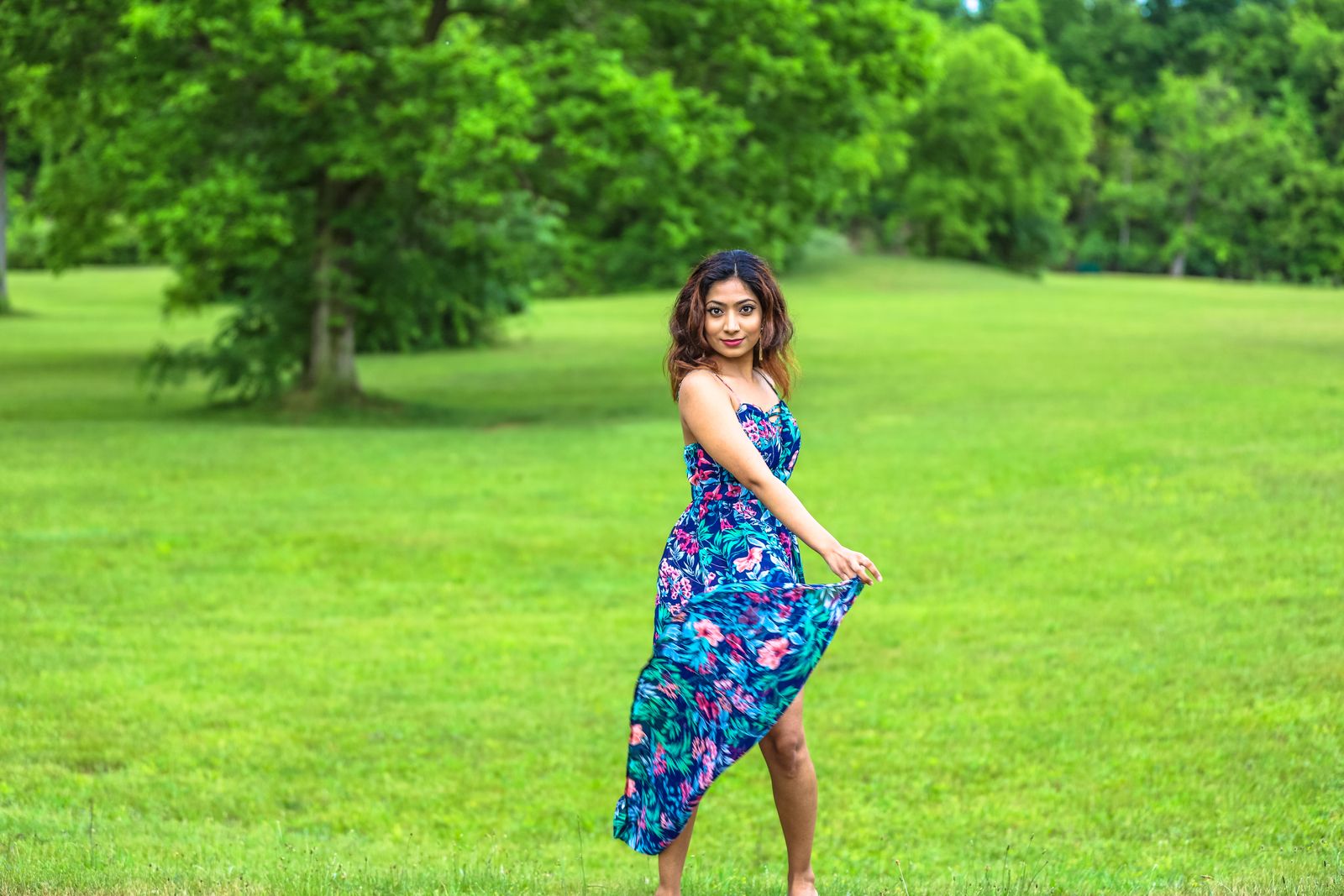
Photo by AA's Photography on Pexels
| Layer type | Covers the lacing? | Warmth | Best setting | Main risk | |---|---|---|---|---| | Cropped denim or twill jacket | No — ends above it | Moderate | Daytime outdoor events, casual dinners | Boxy cut can hide the waist | | Open kimono or duster, unbelted | Partly, and softly | Light | Vineyards, evening terraces, travel | Long hems drag on grass | | Square or triangular shawl | Yes, but drapes over | Moderate to high | Cool evenings, formal daytime | Slides off bare shoulders | | Cropped knit shrug or bolero | No | Light | Ceremonies with shoulder-coverage rules | Reads dated if too tight | | Tailored blazer | Yes, and presses on it | High | Office-adjacent or city events | Crushes the bow, adds bulk |
The pattern is clear. Short and open beats long and closed, and soft beats structured.
What to look for in a cropped jacket
Cropped is the single most reliable category, because a jacket that ends at or just above your natural waist stops before the lacing panel begins. Four specifics to check:
- Hem position. Hold the jacket against you while wearing the dress. The hem should land at or above the narrowest part of your waist, where the lacing starts to draw in.
- Back vent or no back seam detail. A plain back panel is better than one with a center vent, which will gap open over the laces and look unintentional.
- Sleeve length above the wrist. Bracelet or three-quarter sleeves keep the eye on the dress. Full sleeves plus a cropped body reads bottom-heavy.
- Lining that slides. Smooth lining will not catch on lace ends. Unlined cotton drill will.
How to wear an open wrap or duster over a lace-up back
Length is the variable that matters, and it interacts with the dress's thigh-baring slit. Two workable options:
Wear it fully open and unbelted. Belting a wrap over a dress that already has built-in waist shaping doubles up the cinch and usually creates a bunched line at the ribs. If you want the laces visible, push the wrap back off the shoulders and let it hang from the upper arms for photos, then pull it up when you are cold.
Shawls and wraps: the practical version

Photo by Vika Glitter on Pexels
A large square shawl folded once into a triangle is the best cold-evening answer for a bare-shouldered bustier dress, because it adds real warmth without any fitted panel touching the lacing. The failure mode is slippage. Three fixes that do not involve holding it all night:
- Cross the ends in front and tie them loosely at the small of your back, below the lacing panel rather than over it.
- Use a small brooch or shawl pin at the shoulder rather than the center front, which keeps the sweetheart neckline clear.
- Choose a shawl with weight — a fine wool or a heavy viscose blend stays put where a light silk scarf slides.
Matching the layer to the event
- Outdoor daytime celebration. Cropped denim jacket carried, not worn, until the temperature drops. Grass and long hems do not mix, so skip the duster.
- Ceremony with shoulder coverage requested. A cropped bolero or a shawl worn up over both shoulders, removed afterward. This is the one case where covering the lacing is the point.
- Evening restaurant or terrace. Open kimono in a solid color drawn from the dress print. Shoulders bare inside, covered outside.
- Travel and airports. Long open cardigan, because it doubles as a blanket and does not need pressing. Roll it rather than folding it.
- Cool, breezy coastal settings. Weighted shawl. Wind will lift anything unlined and open.
Sun coverage is the other practical reason to layer, and it is a different problem from warmth. A bare-shouldered bustier dress leaves the shoulders and upper back exposed for hours at an outdoor daytime event. A light long-sleeve open shirt worn as a layer covers exactly the area that burns, weighs almost nothing, and can be tied at the waist when you go inside — though on this dress, tying it at the waist covers the lacing, so drape it over one arm instead.
If you are still deciding how the dress reads on its own before adding anything, the styling guide for this dress covers the base looks that layers build on, and the cottagecore styling notes are useful for choosing softer natural-fiber layers.
FAQ
Can I wear a fitted blazer over a lace-up back dress at all? You can, but accept that the lacing disappears and the bow will flatten. If the event requires a blazer, tie the back laces in a flat knot with short ends rather than a bow, so nothing bulky sits under the jacket.
Does layering hide the waist shaping? Only if the layer is closed or falls straight from the bust. Open layers leave the center front visible, which is where the waist line reads most clearly. Cropped layers stop above the waist entirely.
What color layer works with a multicolor floral print? Pick one color already in the print, ideally the least dominant one, or go neutral. A layer in a second pattern almost never works over a bold botanical because the scales compete.
How do I stop a jacket from catching on the lace ends? Tuck the tied ends flat against the dress and, if they are long, tuck them under the crossed lacing itself so nothing hangs loose. Smooth-lined jackets help; unlined textured ones snag.
Next step
Try the dress on with the three layers you already own — something cropped, something open and long, and a shawl — and check each one in a mirror from behind, not just the front. The back view is the one that decides whether a layer works with a lace-up dress, and it takes five minutes to settle before an event rather than during one. For more on how the closures behave in wear, see the fit test notes.
Cover photo by Vika Glitter on Pexels.