
A Bustier Sundress on a Long-Haul Flight: Wear It or Pack It?
On a long-haul flight, the better plan is almost always to pack a fitted bustier sundress and change after landing rather than wear it in the air. Cabin conditions work against a garment with a fixed waist circumference: reduced cabin pressure expands gas in the digestive system, hours of immobility cause mild fluid pooling, and a seatbelt sits directly across the waistline. Wearing it aboard is workable on shorter flights, or when you land straight into an event with no time to change — and in that case the lacing should be set loose for the flight and tightened on arrival.
What actually happens to a fitted waist at altitude
Cabins are typically pressurized to the equivalent of six to eight thousand feet rather than sea level. Lower pressure means gas in the gut expands, which is why people commonly feel bloated on long flights regardless of what they wore. A garment shaped by a lace-up back and a fitted bustier top holds one circumference; it cannot absorb that change, so any pressure you were tolerating at the gate increases in the air.
Immobility is the second factor. Sitting for eight or ten hours slows circulation and causes mild swelling, mostly in the feet and lower legs but sometimes at the waist too. Both effects peak late in the flight and resolve within a few hours of walking around after landing — which is precisely the argument for having the dress in your bag rather than on your body during those hours.
Wearing it aboard versus changing on arrival

Photo by Willians Huerta on Pexels
| Consideration | Wear it on the plane | Pack it and change after landing | |---|---|---| | Comfort hours five to ten | Waist tension rises as gas expands and legs swell | Not an issue | | Seatbelt across the waist | Sits directly on the shaped section | Not an issue | | Arrival readiness | Ready immediately, no bag access needed | Needs fifteen minutes and a bathroom | | Creasing | Creases from sitting, especially across the lap | Creases from folding, which hang out faster | | Aircraft bathroom trips | Manageable, the skirt is the only variable | Not applicable in flight | | Cabin temperature | Cabins run cool; bare shoulders need a layer | Not applicable | | Risk if bags are delayed | None | Real, unless it is in your carry-on |
The pattern is clear enough: wearing it buys arrival readiness and costs comfort during the hours you are least able to do anything about it. Changing after landing costs fifteen minutes and requires the dress to be in your cabin bag.
If you wear it in flight, seven adjustments
How it travels in a bag
Keep it in your carry-on if you are landing on the day you need it, and treat the bodice as the fragile part. The skirt tolerates folding; the shaped top prefers not to be crushed under heavy items. Loosen the lacing before packing so the panel lies flat, close the side zipper so the tape stays aligned, and lay the dress flat with the skirt folded up over the bodice rather than the other way around. Anything soft — the layer you brought for the cabin — goes on top of the bodice rather than under it.
One efficient trick: leave the lace-up back tied at your fitting setting and pack it that way. With a side zipper, you do not need to re-lace to get dressed, which turns an airport bathroom change into a genuinely quick job.
The arrival change, realistically
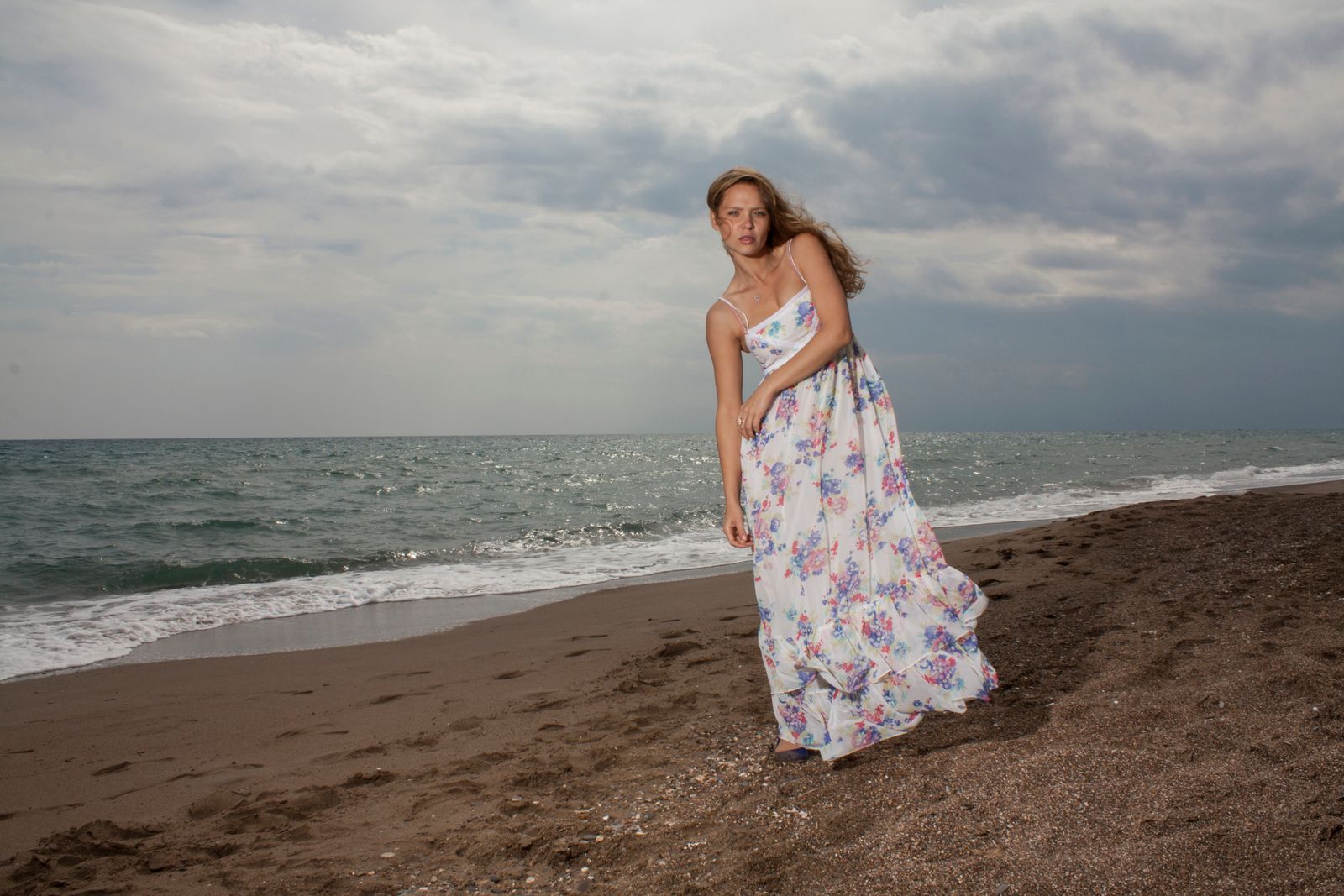
Photo by Engin Akyurt on Pexels
This is where the side zipper earns its place. A lace-up back you have to tie behind you is awkward without a mirror and slow in a cubicle. A back that is already laced and tied, combined with a zipper at the side, means the sequence is: step in, zip, adjust the neckline ties, done. Practice it once at home so you know whether your laced setting is loose enough to step into, because a setting tuned tight enough to require untying defeats the purpose.
Fifteen minutes after landing, take one more pass at the lacing. Your waist measurement after a long flight is not your waist measurement in the evening, so a setting chosen in the terminal may need easing before dinner and firming up the next day. This is normal and is the reason an adjustable closure suits travel better than a fixed one, a point the comparison with traditional sundresses develops further, and one reason a structured floral dress features in styling plans built around a single versatile piece.
Cool cabin, hot destination
Long-haul flights frequently start in one climate and end in another, and the practical problem is the twenty minutes at each end rather than the flight itself. Cabins are cool, so a layer is not optional if you are wearing a bustier top aboard. Arriving somewhere hot means that layer becomes something to carry, so choose one that folds small and can live in the same bag as the dress.
If you are changing on arrival, the sequence that works is: fly in whatever is comfortable, change into the dress last, and put the travel clothes into the bag the dress came out of. That keeps you out of the situation where you are holding a jacket, a cardigan, and a pair of trousers in a taxi line in ninety-degree heat.
FAQ
Is it a bad idea to wear a shaped dress on a plane? It is not harmful, but it is less comfortable than the alternative, because the waist circumference is fixed and your body's is not over ten hours. If you do wear it, lace it clearly looser than your normal setting and expect to tighten it after landing.
Will the dress arrive too creased to wear? Creases from folding generally relax within an hour on a hanger in a steamy bathroom, and the printed skirt is more forgiving than a plain solid fabric. Creases from sitting in it for ten hours land across the lap and take longer to fall out, which is another argument for packing it.
Can I get dressed in an airport bathroom without help? Yes, provided you leave the lace-up back tied at a setting you can step into and use the side zipper as the closure. That is the whole reason to pre-lace before packing.
Should the lacing be tighter or looser than usual for travel? Looser, and not by a small margin. Cabin pressure and hours of sitting both increase circumference, so a setting that feels right at the departure gate will feel tight by the middle of the flight.
A practical next step
Before your next long flight, do one dry run at home: lace the back to a setting you can step into with the zipper open, then confirm you can get in and out of the dress without untying anything. If you can, the dress packs flat and you can change in fifteen minutes at the other end — which makes the wear-or-pack question easy to answer in favor of packing.
Cover photo by beytlik on Pexels.