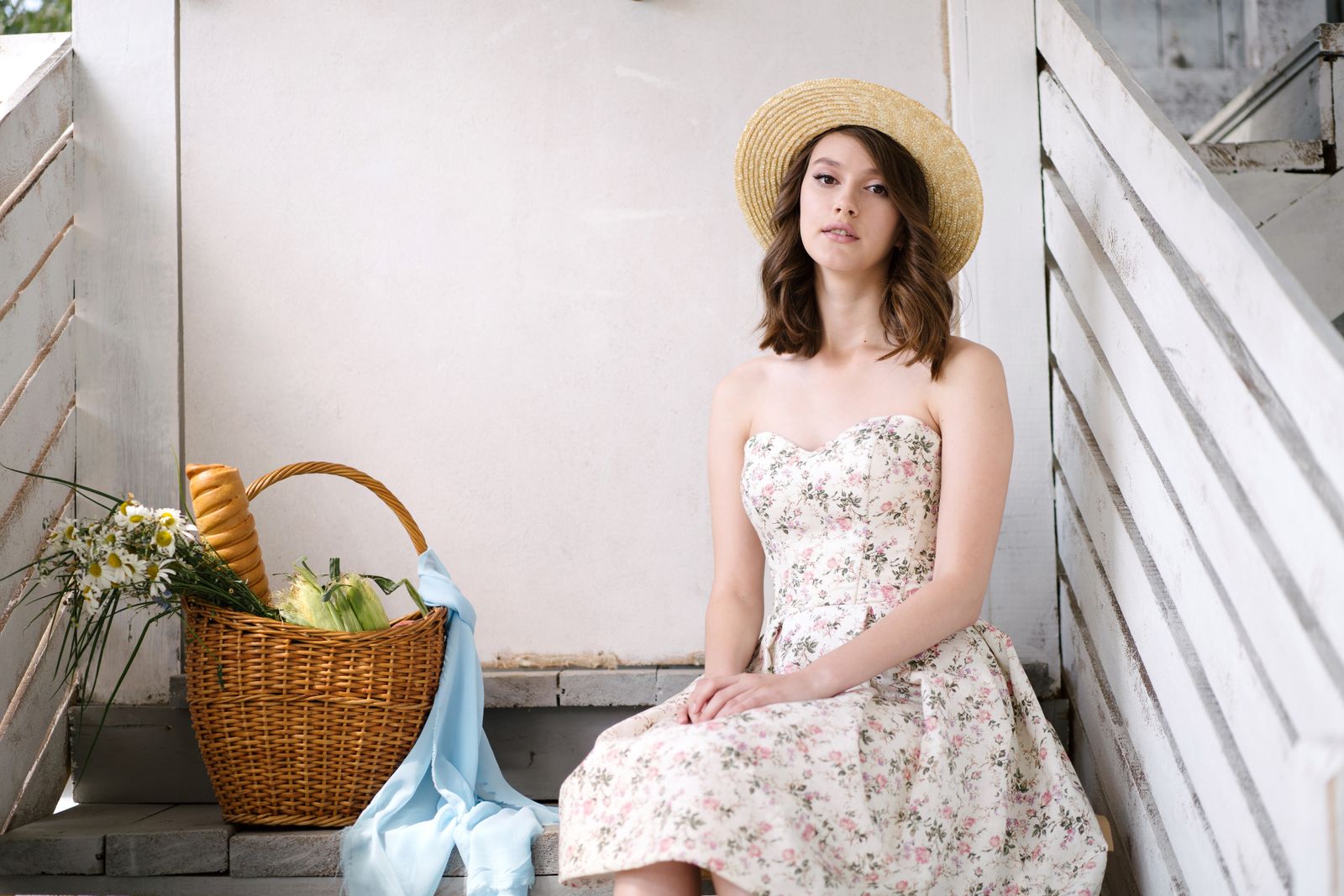
Destination Wedding Guest Guide: Traveling With a Floral Bustier Sundress
A destination wedding is three or four events in one suitcase, which is why guests are better served by one adaptable dress than by three single-purpose ones. A printed bustier sundress covers a welcome dinner, a daytime ceremony, and a farewell brunch with nothing changing except footwear, jewelry, and whether a wrap is involved. What it does not cover is a black-tie evening reception, and that is the one event worth packing separately for.
What makes dressing for a destination wedding different?
Four constraints that a local wedding does not impose.
Multiple events, one bag. Most destination weddings run across two to four days with a welcome gathering, the ceremony and reception, and something informal at the end. Each has a different tone and the same luggage allowance.
No backup wardrobe. At a local wedding a forgotten item is a trip home. Abroad, whatever is in the case is the entire set of options, so redundancy has to be designed in rather than assumed.
Climate you have not dressed for. Coastal humidity, high-altitude evening temperature drops, and inland summer heat all behave differently, and none of them match the conditions you tried the outfit in at home.
Terrain. Sand, lawn, cobblestone, boat decks, and cliffside paths each rule out a category of footwear. The ground is usually a bigger constraint than the dress code.
A garment with built-in structure handles the first two constraints well. A fitted bustier top with waist shaping and a lace-up back arrives with its own adjustment range, so it does not depend on a fitting or on the fit being identical to the day you bought it. A side zipper means dressing without help in a hotel room, and hidden pockets mean a phone and a room key travel with you when a bag would be inconvenient.
Which events does one printed sundress actually cover?
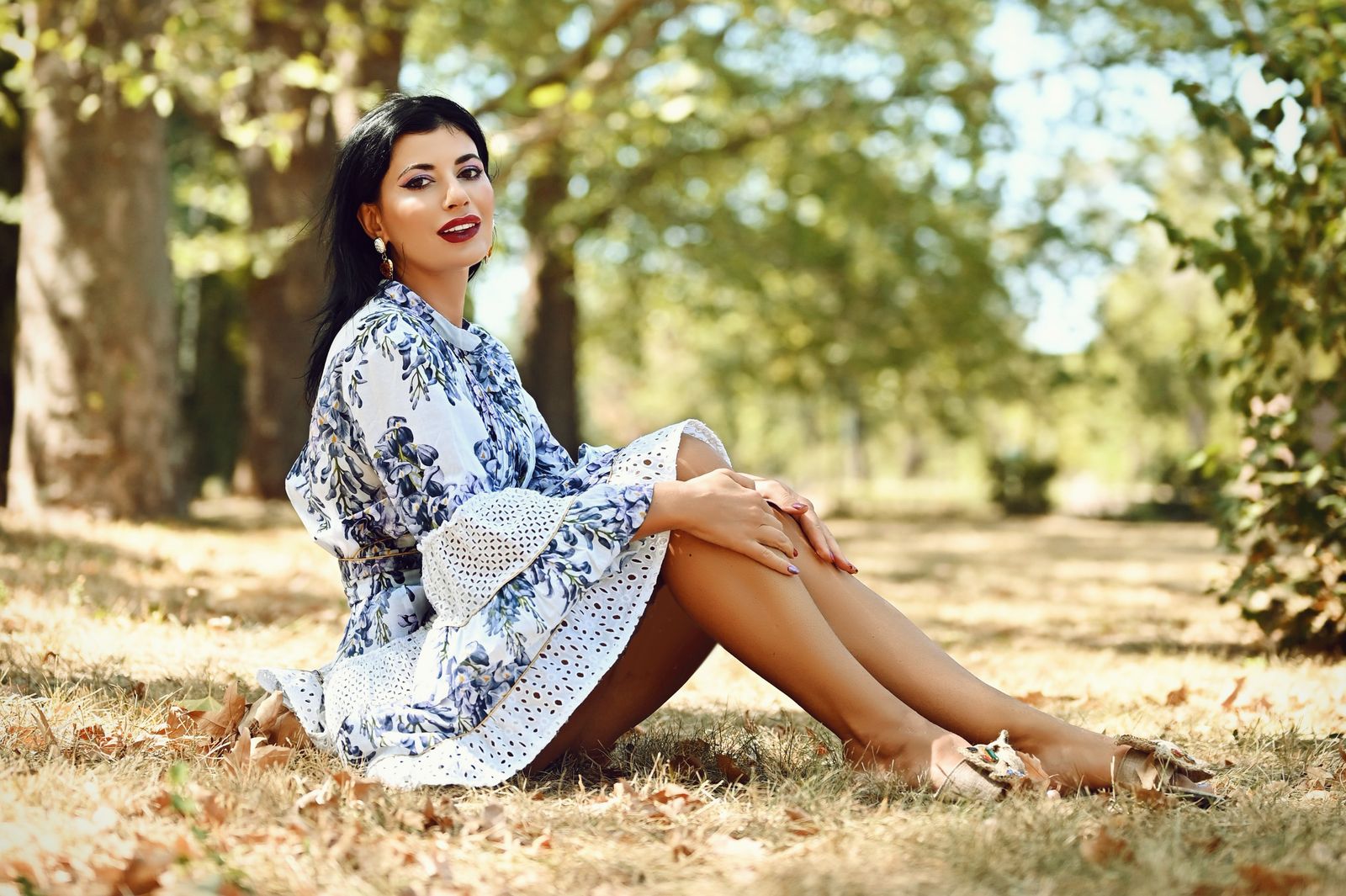
Photo by Inna Mykytas on Pexels
| Event | Works with a printed bustier sundress | What to change | |---|---|---| | Welcome dinner or rehearsal gathering | Yes | Heeled sandals, statement earrings | | Daytime outdoor ceremony | Yes | Block heel or wedge, a wrap for religious venues | | Garden or vineyard reception | Yes | Set the neck drawstring for dancing, flat option in a bag | | Beach ceremony | Yes | Flat sandals or bare feet; nothing that sinks | | Formal evening reception, black tie | No | Pack a separate formal option | | Farewell brunch | Yes | Flat sandals, minimal jewelry, no jacket | | Boat or catamaran excursion | Yes, with care | Flat rubber-soled shoes, hair tied | | City sightseeing between events | Yes | Sneakers or flat sandals, a tote |
Six or seven of eight is the practical case for taking a dress like this as the anchor of the trip. The stated dress code on the invitation settles the one exception.
How do you plan a wardrobe around one dress?
That is a complete wedding-weekend wardrobe in a carry-on, and the second dress is the only optional item on the list. Styling combinations that stretch a single dress across those registers are set out in the styling guide for the dress.
What do local customs and venues require?
This is where guests most often get caught out, and it has nothing to do with taste.
- Churches, cathedrals, and many historic religious sites expect shoulders covered and knees covered during the ceremony. A wrap solves the shoulders. For a dress with a slit, sitting with the slit to the inside and keeping the wrap across the lap handles the rest.
- Mosques and temples may require more, including covered hair. Check the specific site rather than the country.
- Village and small-town venues in conservative regions warrant a more covered approach in transit, even if the reception itself is relaxed.
- Resort weddings usually have no constraint beyond the couple's stated code.
- White, ivory, and cream remain the colors to avoid for guests in most Western traditions, which is one advantage of a multi-color print: it is unambiguous.
- Red in some cultures, and white in others, carries specific meaning. If the wedding is a cultural tradition you are not familiar with, ask the couple. Nobody has ever been annoyed by that question.
How do heat and terrain change the choice?
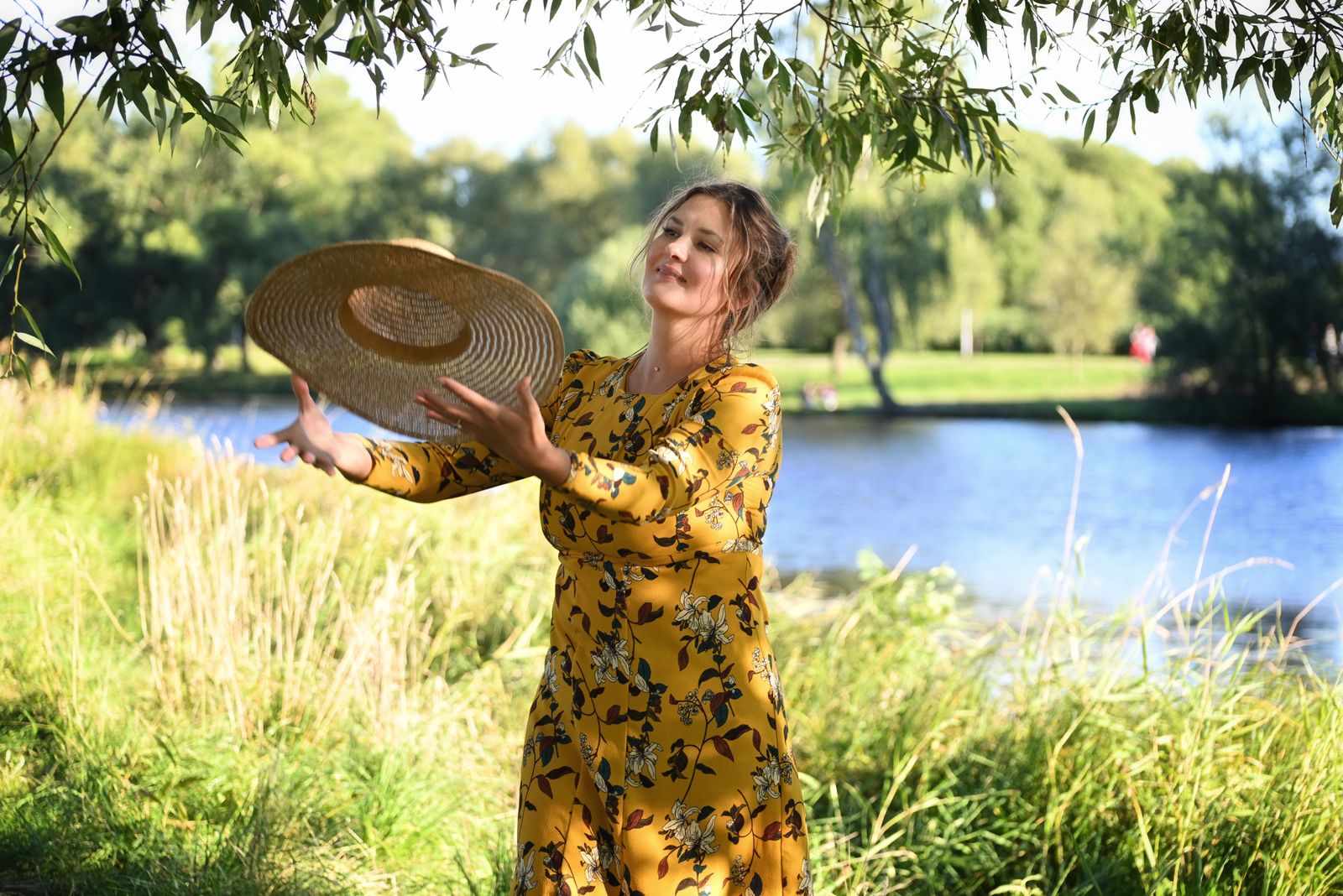
Photo by Dmitry Ovsyannikov on Pexels
Humidity is the factor that decides comfort at a tropical destination, and airflow is what answers it. A dress that is open below the waist moves warm air far better than a full-length or heavily lined garment, and a slit adds to that. What humidity does affect is how long any structured bodice feels fresh, so a mid-afternoon ceremony in high humidity is a good reason to set adjustable elements slightly looser than you would at home.
Terrain is more decisive than climate. Slim heels are unusable on sand, lawn, gravel, and cobblestone, which covers most destination venues. A wedge or block heel handles all four. On boats, only flat rubber soles work. Choose footwear from the ground up and the dress will follow.
For evidence of how a shaped waist behaves across a long, warm day rather than a short fitting, the wear test over a full day is the relevant reading.
What to confirm before you fly
- The stated dress code for every event on the itinerary.
- The ground surface at the ceremony site, which a photograph from the venue's own website usually shows.
- The forecast high and the evening low, not just the high.
- Whether any ceremony is at a religious site with coverage expectations.
- Whether the hotel has an iron or a steamer, so you know what arrival preparation is available.
- That your dress is set and tested before departure, since a destination is a poor place to discover an adjustment problem. The design review of the dress covers what each adjustable element does.
Frequently asked questions
Is a printed sundress appropriate for a destination wedding? For a daytime, outdoor, or resort wedding, yes, and it is one of the most practical choices a guest can make. For a black-tie evening reception it is not, regardless of how good the print is. The invitation's stated code is the deciding authority.
Can one dress really cover a whole wedding weekend? It can cover most of it. Footwear and jewelry change an outfit's register more than most people expect, and a dress with adjustable structure can be set differently for a relaxed brunch than for an evening reception. Plan one additional garment for whichever single event the anchor dress cannot serve.
What if it is extremely hot and humid? Favor airflow over coverage, set adjustable elements a little looser than at home, and choose the flattest practical footwear for daytime events. A wrap is still worth carrying, because heavily air-conditioned interiors are common at hot destinations.
Should the dress travel in a carry-on? Yes, if there is any chance of needing it in the first twenty-four hours. Checked luggage that does not arrive on time is the single most common wardrobe failure at destination weddings, and the ceremony outfit is the one item that cannot be replaced locally on short notice.
The practical next step
Write the itinerary down with a dress code and a ground surface next to each event, then decide which single dress covers the most rows. That list, rather than a general packing rule, tells you exactly how many garments the trip needs and which pair of shoes is doing the most work.
Cover photo by ArtHouse Studio on Pexels.