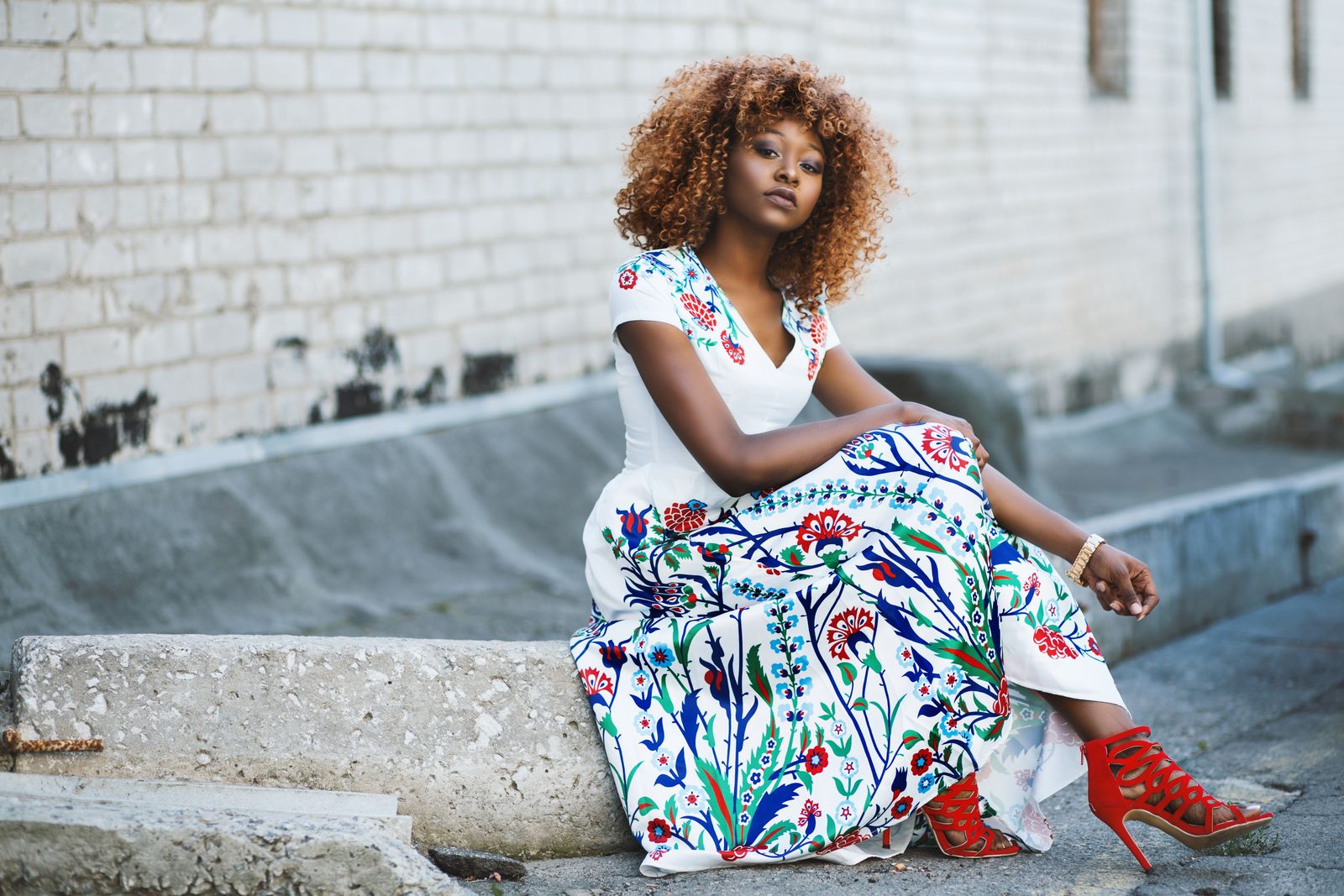
Fitted Bustier Sundress vs. Standard A-Line Sundress: Which Flatters Your Silhouette Best?
The difference between a fitted bustier sundress and a standard A-line sundress is where the garment gets its shape. An A-line takes its shape from the cut of the fabric and hangs away from the body below the bust. A bustier dress like the Floral Bustier Midriff Waist Shaper Dress takes its shape from a structured bodice, a lace-up back, and drawstring ties, so the waist line is set by adjustment rather than by the pattern. Neither is objectively better — they suit different events, different amounts of movement, and different preferences about how close a dress sits.
How each dress creates its silhouette
An A-line dress is named for its outline: narrow at the shoulders or bust, widening steadily to the hem in a shape like the letter A. All of that shaping is cut into the fabric panels before the dress is sewn. Once it is made, the silhouette is fixed. The waist is implied by where the flare begins, not defined by tension.
A fitted bustier dress works the opposite way. The bodice is constructed to hold a shape on its own, and the lace-up back lets you decide how closely it sits. The waist line is wherever you set the lacing. The skirt then falls from that defined point rather than from under the bust.
The practical consequence: an A-line looks the same on the hanger as it does on you, while a bustier dress looks like very little on a hanger and takes its real shape only once it is laced and zipped.
Side-by-side comparison

Photo by Vladu Paul on Pexels
| Factor | Fitted bustier sundress | Standard A-line sundress | |---|---|---| | Source of shape | Structured bodice plus lace-up adjustment | Cut of the fabric panels | | Waist definition | Set by you, at the tension you choose | Fixed by the pattern | | Adjustability after purchase | Meaningful, through lacing and neckline ties | Minimal without alterations | | Airflow through the bodice | Closer to the body | Loose, more air movement | | Time to get dressed | Longer the first time, quick once set | Immediate | | Behavior in wind | Skirt moves, bodice stays put | Whole dress lifts | | Formality range | Reads dressier by default | Casual to moderately dressy | | Layering underneath | Usually needs nothing extra | Often layered with separate shaping pieces | | Needs help to fasten | Back lacing can need a mirror the first time | Rarely |
Which one holds its shape through a long day
A structured bodice stays where it was set. That matters at events with a lot of standing and sitting, because a loose A-line waist shifts every time you get up and needs a small unconscious adjustment each time. The lace-up back removes that: tension is held mechanically rather than by the fabric draping in place.
An A-line has the advantage in heat and in very active wear. There is more air between the fabric and the body, and nothing is under tension. For a long walk on a hot afternoon, that is a real comfort difference.
The honest summary is that a bustier dress trades a little airflow for a lot of stability, and an A-line trades stability for airflow. Which trade is right depends on whether your day involves more sitting or more walking.
Which is more forgiving of an imperfect size match
This is where an adjustable bodice earns its keep. A lace-up back has a working range: the gap can open or close, so the same dress covers a span of measurements rather than a single point. Drawstring ties at the sweetheart neck add a second axis of adjustment at the bust, independent of the waist.
An A-line has no such range. If the shoulders fit and the waist is loose, the waist stays loose. Many people solve this with a belt, which works visually but adds a hard line at the waist rather than shaping the garment itself.
If your bust and waist measurements land in different size brackets on a size chart, an adjustable bodice is usually the easier garment to fit. Notes on how the bodice behaves across body proportions are covered in this look at fit on an hourglass shape.
Which suits which occasion
Choose a fitted bustier sundress for:
- Garden parties and outdoor daytime events where photos will be taken
- Weddings and showers as a guest, where a defined waist reads as dressed up
- Long seated events — lunches, dinners, ceremonies
- Occasions where you want the dress itself to be the structure, with no extra layers
- Very hot days with a lot of walking
- Casual daytime wear where getting dressed quickly matters
- Travel days, where a dress that packs and wears without adjustment wins
- Situations where you want minimal contact between fabric and body
What each design does about pockets, closures, and movement

Photo by Willians Huerta on Pexels
Construction details separate these two categories more than the outlines do.
A bustier dress with hidden pockets set into the skirt keeps the pockets functional without breaking the line, because the skirt has enough fabric to absorb them below a defined waist. Pockets on an A-line are common too, and usually more generous, since a looser skirt hides bulk more easily.
Closures differ meaningfully. A side zipper on a fitted dress lets you step in rather than pull overhead, which protects both hair and bodice shaping. Most A-line sundresses need no zipper at all, which is simpler but also why the fit cannot be adjusted.
Movement is the last difference. A thigh-baring slit on a fitted skirt gives stride room that a narrow fitted skirt would not have; an A-line has stride room built in from its flare. Both solve the same problem in opposite ways — one adds an opening, the other adds width.
How to decide in five questions
Most people answering honestly find they want both in a summer wardrobe, with the structured dress reserved for occasions and the A-line for ordinary days.
FAQ
Is a bustier sundress harder to wear than an A-line? Only the first time. The initial lacing takes a few minutes; after that the setting can be left tied and the dress goes on through the side zipper, which is no slower than any zipped dress.
Does an A-line sundress look less dressy? Not inherently, but it reads more casual by default. Fabric and print do a lot of the work — the same A-line shape can look casual in cotton and formal in a heavier woven fabric.
Can you wear shaping garments under an A-line to get the same effect? You can add smoothing layers underneath, but the A-line skirt still hangs away from the body, so the waist definition does not show the way it does with a laced bodice. It is also an extra layer of fabric in summer heat.
Which is better in wind? A bustier dress on the top half, because the bodice is fixed. Both skirts move; a wider A-line skirt catches more air. A hem with some weight to it behaves better than a very light one in either style.
Next step
If you are deciding between the two for a specific event, work backward from the schedule rather than the photos. Count how many hours you will be seated, how far you will walk, and whether the venue is shaded, then pick the dress that suits the majority of that time. A broader breakdown of the trade-offs is in bustier waist shaper dress versus traditional sundresses, and how built-in waist shaping changes the silhouette explains the bodice mechanics in more depth.
Cover photo by Godisable Jacob on Pexels.