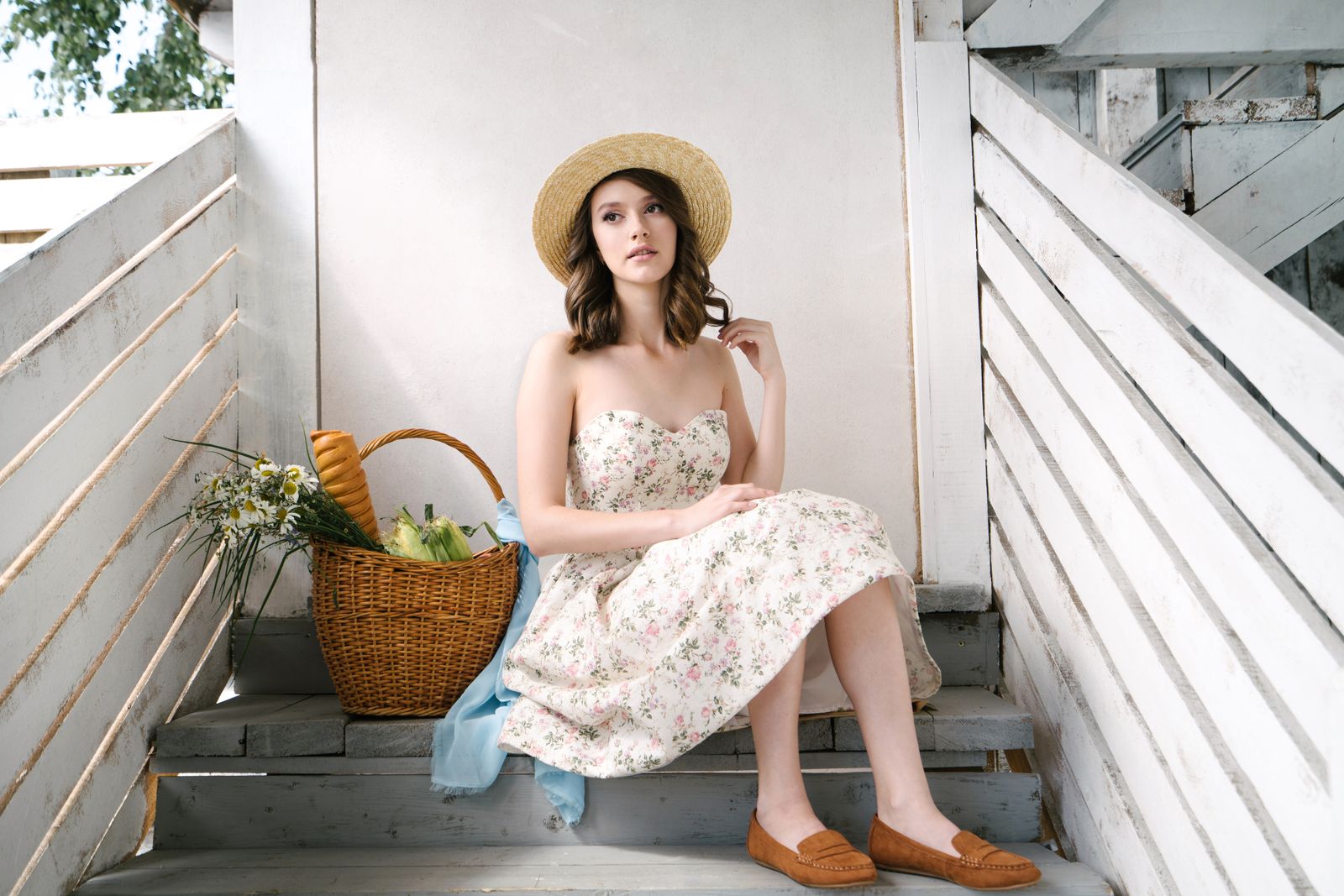
Statement Jewelry vs. Minimalist Accents: How to Accessorize a Sweetheart Print Dress
With a colorful floral print and a sweetheart neckline, minimalist accents win more often than statement pieces — roughly four times out of five. The print is already doing the work of a statement, and a bold necklace competing with it makes both look smaller. The exception is a solid-ground print with a lot of open background, where one substantial piece has room to read.
The practical rule: count the visual events. A busy print plus a structured bustier plus a lace-up back is already three. Adding a fourth loud element crowds the outfit rather than finishing it.
Why a sweetheart neckline changes the necklace math
A sweetheart neck creates two curves that meet at a point in the center front. That shape mirrors the natural curve of a shorter necklace, which is why the neckline has a specific sweet spot rather than a general one.
The usable zone is the skin between your collarbone and the top edge of the bodice. On a bustier top with a drawstring-tie sweetheart neck, that zone is wider than on a crew neck but shorter than on a V-neck. A pendant that lands below the top edge of the fabric disappears against the print. A choker sits above the zone and reads as separate from the dress. What works is anything that fills the middle: a collarbone-length chain, a short pendant, or a fine multi-strand.
- Best lengths: 16 to 18 inches, sitting on or just below the collarbone.
- Avoid: anything long enough to rest on the printed fabric, where it visually vanishes.
- Reliable alternative: no necklace at all, with the attention moved to earrings.
Statement versus minimalist, side by side
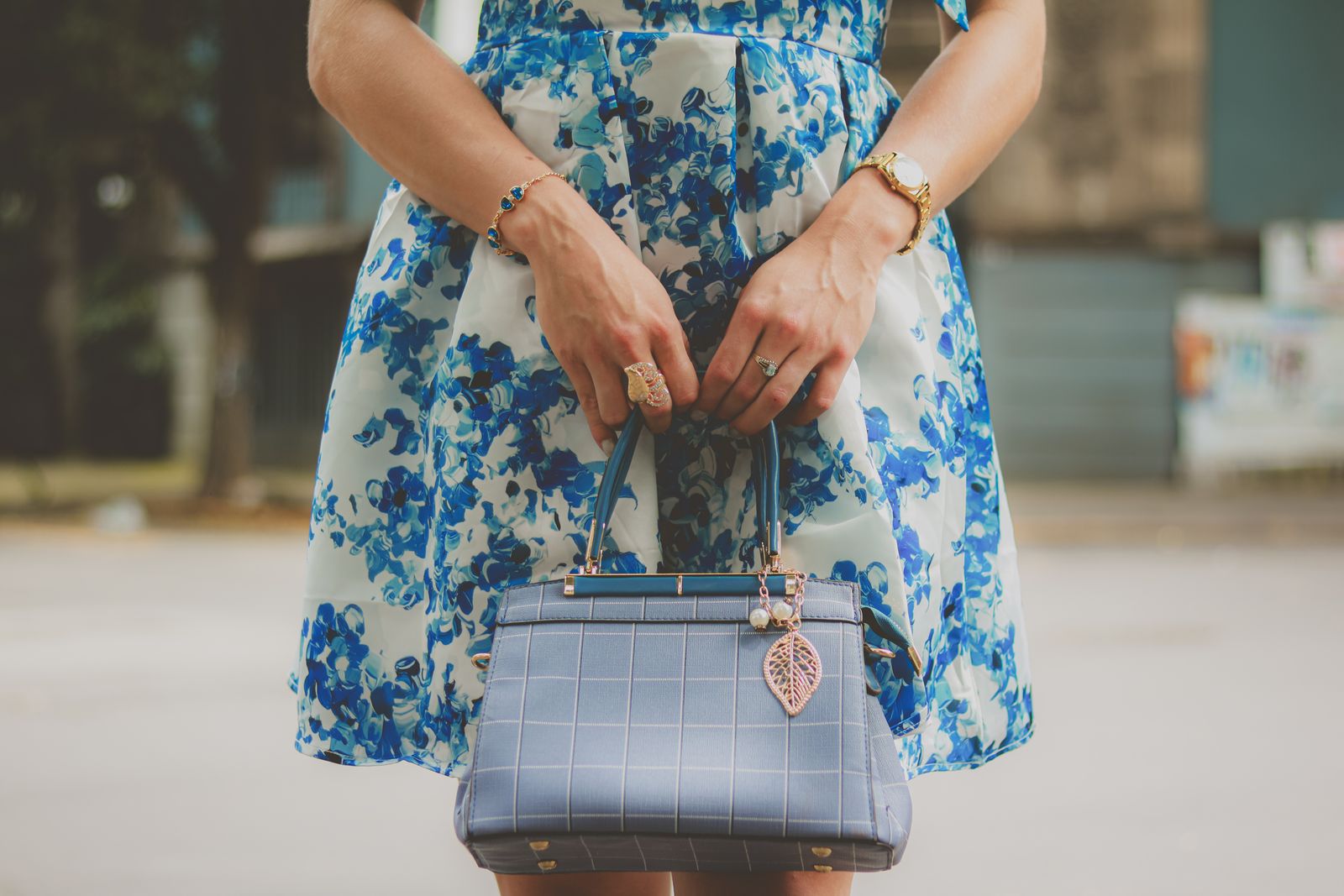
Photo by Jonathan Valdes on Pexels
| Consideration | Statement piece | Minimalist accents | |---|---|---| | Works with | Small-scale or single-color prints, plenty of background | Bold multicolor botanicals, dense prints | | Placement | One location only — ears, wrist, or neck | Can repeat across two or three points | | Risk | Competes with the print; reads costume in photos | Can look unfinished at formal events | | Photography | Catches light, can blow out in bright sun | Reads consistently indoors and out | | Evening transition | Instant lift after dark | Needs a metallic shoe or bag to carry it | | Movement | Long earrings tangle with lace-up back ties | Nothing to catch |
The movement row is worth attention on this dress specifically. The Floral Bustier Midriff Waist Shaper Dress has a lace-up back with tie ends, plus drawstring ties at the neckline. Long, hooked, or fringed earrings catch on ribbon. Studs, small hoops, and drop earrings with a smooth profile do not.
Choosing metal against a multicolor print
Metal tone matters less than most guides claim, but there is a usable shortcut. Warm prints — corals, peaches, warm reds, golden yellows, olive greens — sit comfortably with gold and brass. Cool prints — blues, lilacs, cool pinks, true whites — take silver, white gold, and pale steel. Prints with both warm and cool families, which most colorful summer botanicals are, will accept either, so pick the one that matches your other hardware.
That last point is the real rule. Match the jewelry metal to your watch, your belt hardware, and any metal on your shoes or bag. Mixed metals within one outfit is the thing that actually looks accidental, not a gold necklace on a cool print.
A four-step method for accessorizing this dress
Scale: the rule that actually decides it
Most accessorizing advice talks about color, but scale is what makes an outfit look considered. The working principle is that the jewelry and the print should not be the same size. A dense print made of small repeated motifs leaves no visual gaps, so a small delicate necklace sitting against it disappears — if you want a necklace with a small-scale print, it needs to be substantial enough to read as a separate object. A print made of large motifs with space between them has gaps a fine chain can sit in without competing.
That gives a counterintuitive result. A busy small-scale floral wants either nothing or one clearly larger piece. A bold large-scale botanical wants fine jewelry, because the print is already supplying the large shapes. Most people do the opposite, matching bold to bold and small to small, and the outfit reads either flat or crowded.
Texture follows the same logic. Beaded, hammered, or textured metal reads as busier than polished metal at the same size, so treat a textured piece as one step larger than it physically is when you are judging it against a print.
What to do at the wrist, hands, and waist
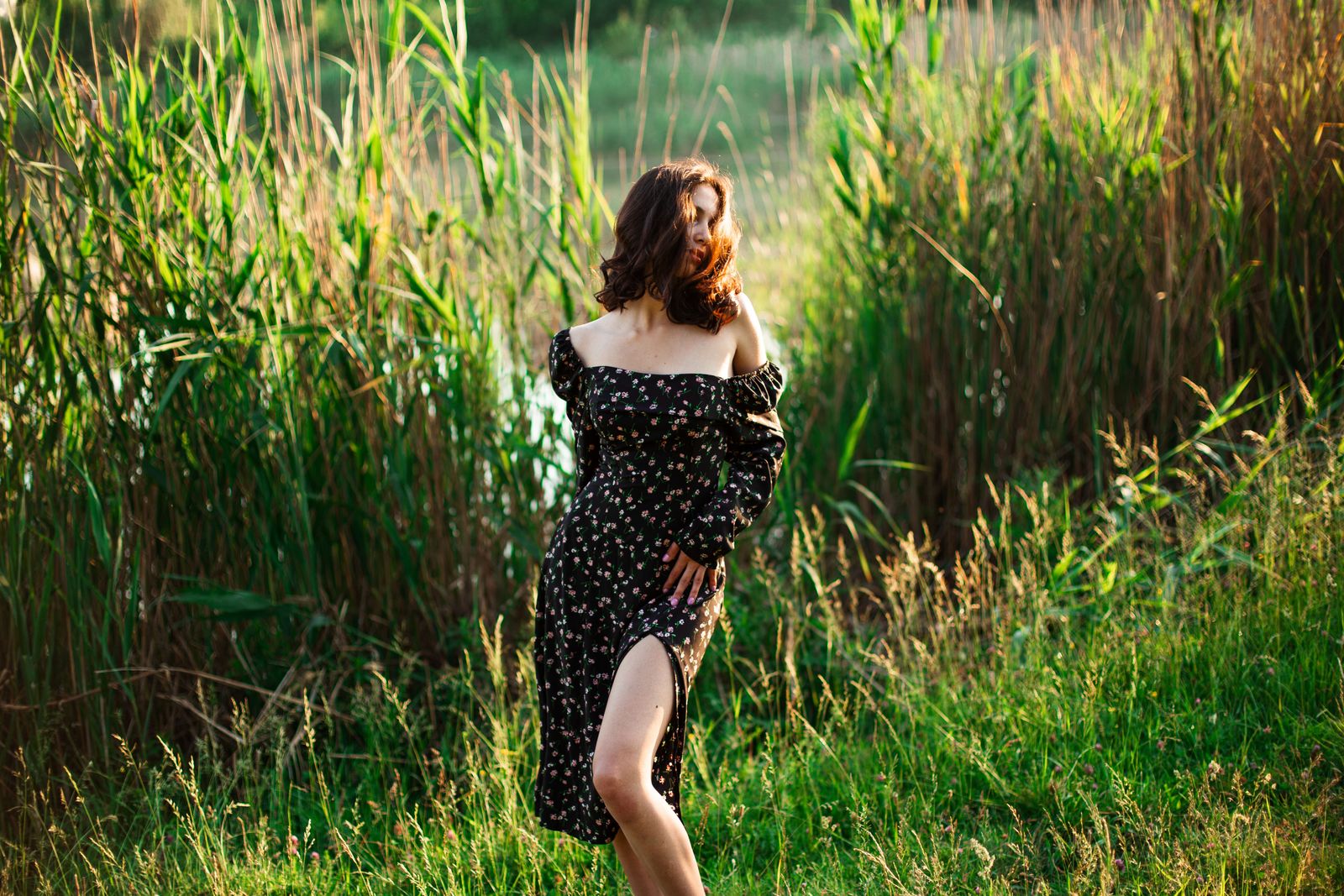
Photo by Eugenia Sol on Pexels
Wrists are the safest place to add interest, because they sit away from both the print's densest area and the neckline. A stack of two or three fine bangles adds movement without weight. One wide cuff works if you have chosen no necklace.
Rings are effectively free — they never compete with a bodice print. If you want one statement item and the print is busy, a substantial cocktail ring is the least risky place to put it.
Skip the belt. The dress has built-in waist shaping and a lace-up back that cinches at the waist, so a belt adds a third waist line and usually bunches the fabric. If you want to define the waist further, adjust the lacing rather than adding hardware. The waist shaping breakdown covers how that structure works.
Bags, hair, and the rest of the finish
A bag is an accessory decision, not an afterthought, because it is the largest single block of color you add. With a multicolor print, a neutral bag in cream, tan, or black is the safe choice; a bag that picks up one minor color from the print is the interesting one. Avoid matching the dominant print color exactly, which looks like an attempted set.
Two more practical notes. The dress has hidden pockets, so a small bag is often enough — you do not need a tote to carry the basics. And hair worn up leaves the entire neckline and lace-up back visible, which is the argument for earrings as your focal point; hair worn down covers the ears, which is the argument for a necklace instead. Decide hair first, then jewelry.
FAQ
Can I wear a statement necklace with a bold floral bustier dress? Yes, if the print has open background space and the necklace sits in the collarbone zone rather than on the fabric. With a dense all-over print, statement earrings almost always look better than a statement necklace.
What earrings suit a drawstring sweetheart neckline? Anything with a smooth profile that will not catch on the neckline ties or the back lacing. Studs and small to medium hoops are the most reliable. Long fringed styles are the ones that tangle.
Should jewelry match the print or contrast with it? Neither, exactly. Pull one color from the print and use it in the bag or shoes rather than the jewelry, and keep the jewelry metallic and neutral. That gives you a connection without a matched set.
Do I need a necklace at all? No. With a printed bustier dress, going without a necklace is a legitimate finished look, and it keeps attention on the neckline itself. Add earrings and a ring and the outfit is complete. More styling combinations are in this styling walkthrough.
Next step
Lay out three options on a table before the event: earrings-only, short-necklace-only, and wrist-only. Try each with the dress on and photograph yourself in natural light. The photo will show you which one competes with the print in a way the mirror will not. For a broader sense of how the dress reads as a whole outfit, this wear review is a useful reference.
Cover photo by ArtHouse Studio on Pexels.