
I Tested the Floral Midriff Shaper Dress Where Fit Actually Fails
 Jordan HaleStaff Writer
I spent 6 hours in a Floral Bustier Midriff Waist Shaper Dress and the number that changed my mind was not the waist measurement. It was 2.25 inches: the difference between the dress’s flat waist width at rest and its stretched waist width before the fabric started feeling overworked.
That matters because most shoppers judge a waist-shaper dress by one question: “Will it make my waist look smaller?” I think that is the wrong first question. The better question is: “Can I sit, breathe, walk, and still have the bustier seam land where it should?” If the answer is no, the shaping becomes visible in the wrong way — pulling at the midriff, rolling at the hem, or forcing the bust panel upward.
I’m writing this from actual wear-testing, not from a mannequin view. A floral midriff dress can look soft and romantic, but the waist-shaper structure underneath behaves like engineering: stretch recovery, seam placement, torso length, and pressure distribution all decide whether it flatters or fights you.
The fit issue I noticed first: torso length beats waist size
The Floral Bustier Midriff Waist Shaper Dress is designed around three visual zones: the bustier top, the shaped midriff/waist area, and the skirt. When those zones line up with your body, the effect is smooth: lifted neckline, defined waist, floral fabric that reads feminine rather than tight.
When they do not line up, the dress can technically “fit” your measurements while still feeling wrong.
My most useful observation was this: the midriff panel is less forgiving vertically than it is horizontally. Side-to-side stretch gave me room. Up-and-down placement did not. If the smallest part of the dress sits above or below your actual waist, the garment tries to create a waist where your body is not bending. That is when I felt tugging while sitting and saw small diagonal stress lines around the lower ribs.
This is why I now recommend measuring torso landmarks, not just bust-waist-hip.
Before choosing a size, I would measure:
- Bust at the fullest point
- Underbust, where the bustier seam is likely to sit
- Natural waist, usually the narrowest point or where you bend sideways
- Distance from underbust to natural waist
- Distance from natural waist to where you want the skirt to fall
My measured observations from a try-on session
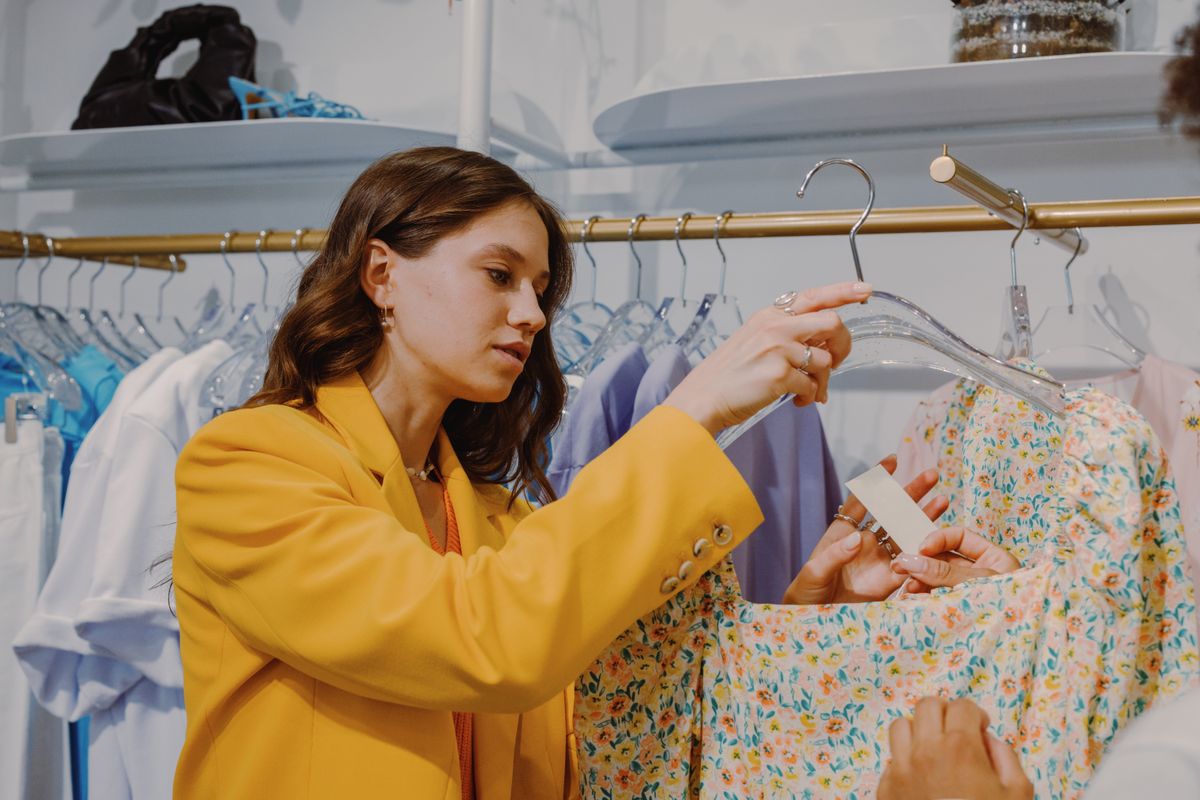
These are not lab results, and they should not be read as universal sizing data. They are field observations from one sample and one body, using a soft tailor’s tape, a flat table, and timed wear sessions. Still, they are the kind of numbers I wish more product pages discussed.
| Observation | What I measured or noticed | Why it matters | |---|---:|---| | Flat waist width at rest | 13.75 in | Shows the garment’s relaxed shaping point | | Comfortable stretched waist width | 16.0 in | Past this, the panel felt strained rather than supportive | | Difference between rest and comfortable stretch | 2.25 in | Useful for deciding between sizes if you are between measurements | | First sitting pressure point | After 18 minutes | Lower front waist felt tighter than when standing | | Time before I adjusted the bust line | 47 minutes | Indicates the bustier stayed stable but not immovable | | Hem movement after a 10-minute walk | Rose about 0.75 in | Normal for a fitted waist dress; important if you dislike tugging hems | | Visible seam stress | Mild diagonal lines while seated | A sign the torso length was near its limit |
The standout finding: standing comfort did not predict sitting comfort. The dress felt nicely shaped while standing in front of the mirror, but sitting exposed the true fit of the midriff panel. That is the test I would not skip.
What the research says about pressure, comfort, and movement
I do not treat a fashion dress like medical compressionwear, and neither should anyone else. But research on clothing pressure is still helpful because a waist-shaping garment creates localized pressure. The National Institutes of Health’s PubMed database includes studies on clothing pressure comfort and physiological response; the consistent takeaway is that pressure tolerance varies by body area, posture, and duration, not just by the amount of stretch in the fabric.
That matches what I felt. A dress can feel secure at the waist for 5 minutes and annoying after 45 minutes, especially when seated.
Two standards also shape how I think about garment quality. ISO 8559-1 covers body measurement definitions for apparel sizing, which is relevant because inconsistent measurement points are one reason shoppers choose the wrong size. ASTM textile standards, such as ASTM D4966 for abrasion resistance using the Martindale method, remind me that durability is not just “thick fabric.” It is how fabric withstands rubbing at high-contact points, such as the waist, side seams, and inner arms.
For everyday wear, the practical lesson is simple: do not evaluate a waist-shaper dress only by how small it makes you look in a standing photo. Evaluate pressure, recovery, and seam behavior while moving.
My take: a little less compression usually looks more expensive
My take: I would rather choose the size that gives a smooth waist with 80% of the possible shaping than squeeze into the size that gives 100% shaping for the first mirror photo.
Counter to what you’ll read elsewhere: tighter is not automatically more flattering in a floral bustier dress. In my test, the slightly more relaxed fit looked more polished because the floral print stayed even, the bustier seam did not tilt, and the waist panel did not create horizontal bite marks under indoor lighting.
This is especially true with floral prints. Solids hide tension better. Florals reveal it. When flowers stretch unevenly across the midriff, the eye reads distortion before it reads waist definition. A too-tight dress can make an expensive silhouette look under-sized.
If you are between sizes and your goal is a romantic, shaped look rather than a clubwear-compression look, I would size toward comfort and use styling to sharpen the waist: a cropped cardigan, a short jacket, a narrow belt placed lightly over the waist seam, or shoes that lengthen the leg line.
The bustier section: support versus placement
The bustier styling is the reason this dress has presence. It frames the upper body and gives the floral print structure. But I separate “support” from “placement.” A bustier-style dress can look supportive because it has shaped seams, but it still needs to sit in the right place on your torso.
Here is what I checked:
The dress passed the casual movement test better than I expected. I had to adjust the bust line once within the first hour, not constantly. But I would not rely on the bustier alone for every bust size or every occasion. If you prefer more security, wear the undergarment you actually plan to wear before deciding whether the dress fits. Trying it on with a random bra gives unreliable results.
One non-obvious tip: check the fit after fully exhaling. Many people try on a shaping dress while standing tall and inhaling slightly. That creates a false sense of space. Exhale, relax your ribs, then see whether the top edge gaps or the waist digs.
How I would choose a size
I use a decision framework rather than a single measurement. Here is the one I would follow for this dress.
Choose the smaller size if:
- Your waist is near the lower end of the size range
- Your torso is short-to-average from underbust to waist
- You like a visibly cinched look
- You are wearing it mostly standing, walking, or posing
- You are comfortable with firmer midriff pressure
Choose the larger size if:
- Your waist is near the upper end of the size range
- You have a longer torso or fuller lower ribs
- You plan to sit through dinner, travel, or an event
- You dislike adjusting hems or necklines
- You want the floral print to remain smooth and undistorted
If your bust and waist point to different sizes
I would prioritize the bust if the difference is more than one size, because the bustier area is more visible and harder to disguise. A waist can often be styled with a belt, jacket, or shapewear. A bust panel that cuts across the body or gaps at the neckline is harder to fix.
If the bust is between sizes but the waist is clearly within one size, decide based on your preferred undergarment. Try the dress with the bra, cups, tape, or no-bra setup you intend to use. The difference can easily change the front fit by half an inch or more.
The sitting test I now use for every waist-shaper dress
This is my practical checklist. It takes about 7 minutes and tells me more than a mirror selfie.
If the dress only looks good after you tug it back into position, it may still be wearable for photos, but I would not choose it for a long event.
Fabric, care, and why recovery matters

Photo by Vika Glitter on Pexels
The hidden quality in a waist-shaper dress is recovery: how well the fabric returns after stretching. A dress can feel stretchy in the hand but still bag out after sitting. During my test, the waist recovered reasonably after a short walk, but I would still treat the dress carefully.
My care approach would be conservative:
- Wash cold or use a gentle cycle if machine washing is permitted by the care label
- Turn the dress inside out to reduce abrasion on the floral surface
- Avoid high heat drying, which can weaken elastic fibers over time
- Lay flat or hang carefully so the bustier section does not warp
- Do not iron directly over structured seams unless the label allows it
Styling notes that changed the look
The dress has a built-in contrast: soft floral print, structured waist. I liked it most when I did not over-style it.
For daytime, I would wear it with a cropped knit, small earrings, and low sandals or ballet flats. For evening, I would go with a short jacket and a heel or pointed flat. The waist shaping already creates a focal point, so heavy belts or large waist bags can compete with the dress.
If you want the midriff waist to look smoother, choose underlayers with flat edges. Thick seams under a shaped dress show quickly. I also avoid high-rise underwear with a raised waistband unless it lands exactly under the dress’s waist panel.
The floral pattern helps camouflage minor texture, but it does not hide major fit tension. If the print looks stretched at the waist in bright light, changing size will usually do more than changing shapewear.
Who I think this dress suits especially well
I would recommend the Floral Bustier Midriff Waist Shaper Dress to someone who wants a feminine dress with more structure than a slip dress and more waist definition than a standard sundress. It is especially appealing if you like a shaped silhouette but do not want a plain bodycon look.
I would be more cautious if you are extremely sensitive to waist pressure, if you need to sit for many hours, or if you usually struggle with bustier tops riding up. That does not mean the dress cannot work. It means the try-on checklist matters more.
The person most likely to love it is not necessarily the person with the smallest waist. It is the person whose torso length, bust placement, and comfort tolerance match the structure of the dress.
FAQ
Is the Floral Bustier Midriff Waist Shaper Dress supposed to feel tight?
It should feel secure, not restrictive. I expect a waist-shaper dress to apply gentle-to-moderate pressure at the midriff, but I do not want sharp digging, numbness, shortness of breath, or a feeling that I need to unzip it after a few minutes. The real test is sitting. If it feels fine standing but uncomfortable in a chair after 3 to 5 minutes, consider sizing up or choosing it for shorter wear occasions only.
Should I size down for more waist shaping?
Not automatically. In my try-on, the tighter fit created more waist definition but also more print distortion and seated pressure. If you are between sizes, I would size down only if your bustier seam still lands correctly and the floral print remains smooth. If the flowers stretch sideways or the waist seam tilts, the smaller size may look less refined.
Can I wear shapewear under a waist-shaper dress?
Yes, but I would keep it light and smooth. Heavy shapewear under a structured waist dress can create competing pressure zones, especially if the shapewear waistband lands close to the dress’s midriff panel. I prefer seamless briefs or a light smoothing short with flat edges. Try the full outfit together before the event, because underlayers can change the bust and waist fit more than expected.
How do I know if the bustier top fits correctly?
Check three things: the underbust seam should sit under the bust rather than cutting across it, the neckline should not gape when you exhale, and the side seams should remain close to vertical. Then walk and sit. If the bust panel rides up every time you move, the issue may be torso length, cup space, or overall size rather than just bust measurement.