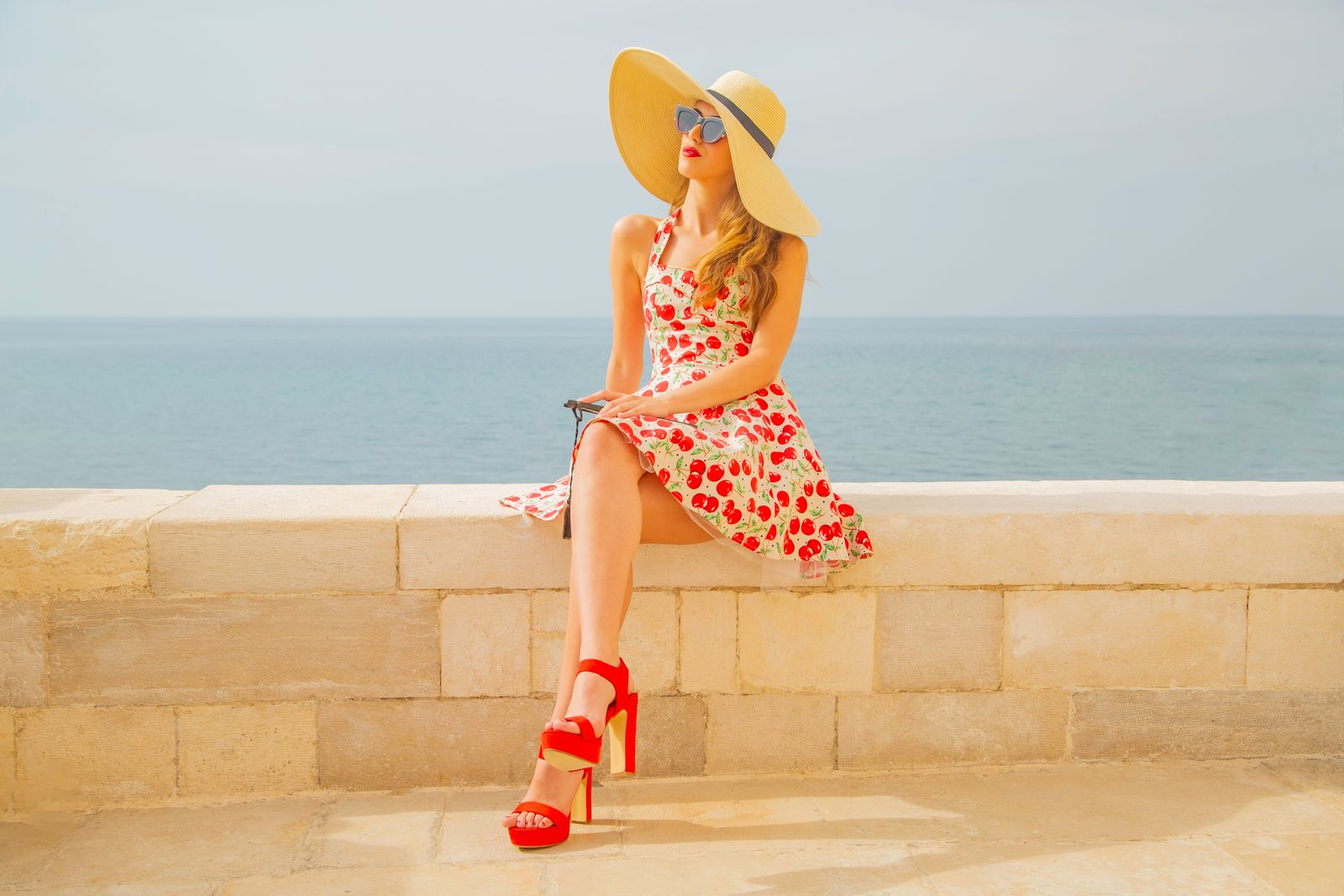
One Dress, Two Climates: A Bustier Sundress in a Heatwave and on a Cool Coastal Evening
A floral bustier sundress can carry both a 95-degree afternoon and a 58-degree evening beside the water. The dress does not change; three things about how you wear it should — how firmly the lace-up back is pulled, what you add above the waist, and what goes on your legs and feet. Heat wants the loosest lacing that still holds the waist in place and nothing across the shoulders. A cool coastal evening wants a layer that stops above the waist seam so the shaping still reads, and something covering the upper back, where a laced opening lets moving air straight through.
What actually changes when the temperature swings thirty degrees
Two forces do most of the work: airflow across the torso, and wind on bare skin. In real heat, discomfort collects at the torso, because that is where fabric sits closest to the body. A fitted bustier top is snug by design, so the ventilation available comes from the neckline, the arms, the hem, and the thigh-baring slit rather than from loose drape. That is workable at high temperatures, but only if you are not adding a second layer over the same area.
Near open water the arithmetic flips. Evening breeze off water commonly makes a reading feel eight to twelve degrees colder than the thermometer says, and it is directional — it hits one side of you and keeps hitting it. The lace-up back is the exposed spot, because openings are exactly where moving air removes heat fastest. That one detail explains most of why a dress that felt correct at four in the afternoon feels thin at eight.
Heatwave: the six adjustments worth making
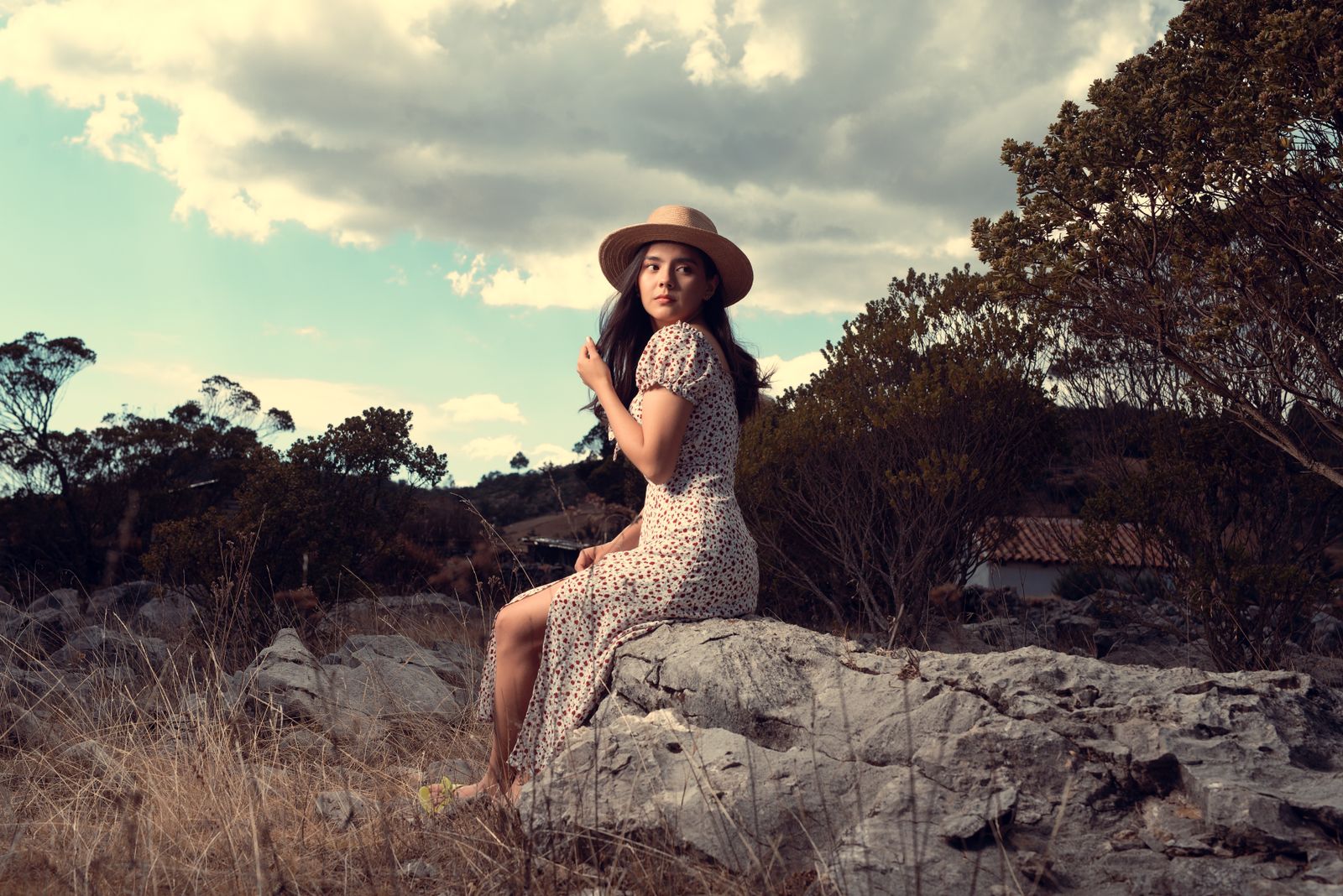
Photo by Josue Velasquez on Pexels
Cool coastal evening: warmth without losing the waistline
The instinct in cooler air is to put on something long, which is precisely what erases the line the dress is built around. The fix is to keep every added layer either above the waist seam or fully open at the front.
- A cropped cardigan or short jacket that ends at or above the waist leaves the cinched section visible and covers the shoulders and upper back.
- A wrap or shawl worn across the shoulders solves the laced-back draft directly and comes off in one motion when you move indoors.
- An open-front layer that hangs past the hip still works if you leave it open, because the eye follows the vertical gap and the waist stays defined.
- Closed long cardigans belted over the top are the one combination to skip. The belt sits over a waist that is already shaped and the result is bulk at the ribs.
Side by side: the same dress in two conditions
| Decision | Heatwave afternoon | Cool coastal evening | |---|---|---| | Lace-up back tension | Loosest setting that holds the waist | Same tension — do not tighten for warmth | | Neckline drawstring ties | Loose, just enough to seat the bodice | Slightly firmer if a wrap is sliding off | | Layer above | None | Cropped jacket, or an open layer, or a shawl | | Legs | Bare, slit open and venting | Closed footwear, slit side turned inward when seated | | Bag | Skip it, use the hidden pockets | Small bag is fine, weather is not pressing on you | | Biggest risk | Heat trapped at the ribs by a second waistband | Wind through the laced back |
Why tightening the lacing does not make you warmer
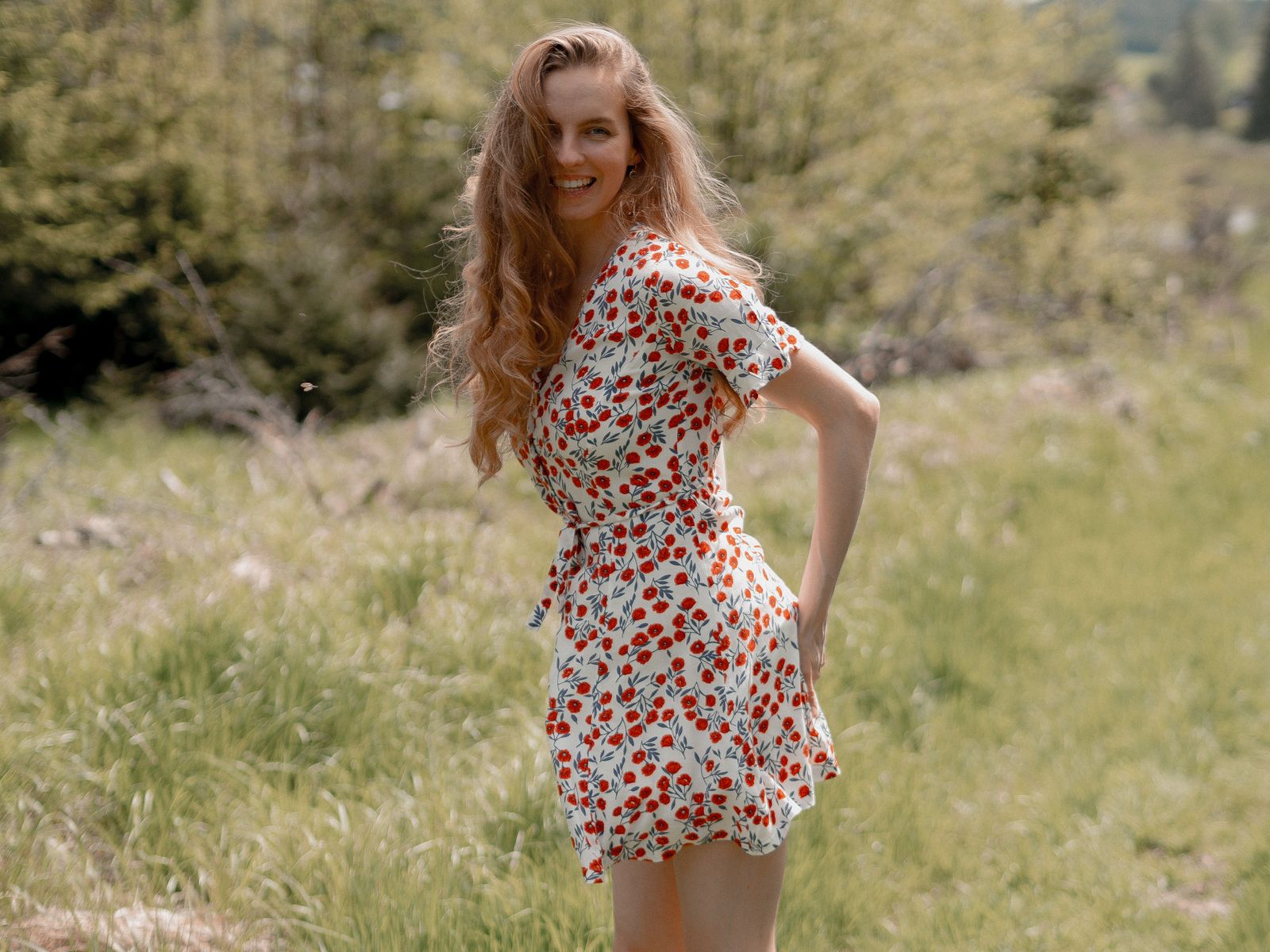
Photo by Pelageia Zelenina on Pexels
This is the most common mistake in cool weather, and it is worth naming plainly. Lace tension changes the shape of the garment, not its insulation. Fabric held closer to skin does not generate heat; it only removes the thin layer of still air that would otherwise sit between the two, which if anything makes you marginally colder. Meanwhile the cost is real — a tighter bodice is less comfortable across a long evening, particularly after a meal.
Warmth comes from covering the shoulders, the upper back, and the upper arms, and from stopping wind at the laced opening. Those are three specific places, and a shawl handles all three. If you have already reached for a layer and you are still cold, the answer is a heavier layer, not a firmer knot. The same logic runs the other way in heat: loosening the lacing helps comfort, but it will not cool you if you are standing in direct sun with a jacket on.
When one day is both
Outdoor events in spring and summer routinely start at two in the afternoon and end after dark, which means one dress and a thirty-degree spread. Plan the dress for the hotter half and the accessories for the cooler half. Set the lacing for the afternoon, because loosening a laced back in a bathroom mid-event is easier than tightening it, and carry exactly two items: a wrap and a shoe you can stand in on cooling grass.
That approach is why a printed bustier sundress travels well across a long day at all. The shaping is in the construction rather than in a separate garment you would have to remove, so the dress itself never becomes the thing you are managing. If you want the underlying reasoning on where that structure comes from, the breakdown of how built-in waist shaping changes the silhouette covers it, and the styling guide covers layer choices in more detail.
FAQ
Is a fitted bustier top a bad choice in a heatwave? Not necessarily. Fit and heat are separate variables. What makes people overheat in fitted clothing is usually a second layer or a belt over the torso, plus dark colors in direct sun. A printed sundress with an open neckline, bare arms, and a slit has three real vents, which is more than many loose dresses offer.
How much colder does it get near water in the evening? Expect the perceived temperature to drop faster than inland, often feeling eight to twelve degrees below the reading once the sun is down and a breeze picks up. The change is fast — frequently within thirty minutes of sunset — so bring the layer before you feel you need it.
Can I wear tights or hosiery with a thigh-baring slit? Yes, and it is a practical answer for a cool evening. The slit will show the leg line, so a plain opaque or semi-opaque finish reads more deliberate than a sheer one. Check it seated in a mirror before you leave, since the slit opens further when you sit.
Does sweat damage a printed dress? Salt from perspiration is the part that matters over time, particularly along the bodice and under the arms. Rinsing or laundering the dress after a hot-weather wear rather than hanging it straight back up prevents most of the gradual dulling people blame on the print itself.
A practical next step
Before your next warm-weather event, do one dry run: put the dress on, lace it, sit for ten minutes, then stand and walk. Whatever felt tight while seated is your real ceiling for tension, and you now know it before the day rather than during it. Note that setting, then decide only two more things — the layer and the shoes — and the temperature swing stops being a problem worth thinking about.
Cover photo by Antonio Conte on Pexels.